Tuesday, September 19, 2017

Dissolved in Lake Coeur d'Alene

If you have not been to Camp Cross, there is one thing it is helpful to know. You cannot drive into it. There are two options. You could hike a trail and ford a creek that feeds Lake Coeur d‘Alene. Some of you may be old enough to recall hiking into camp along the mile or so of trail. The bridge over the creek washed out long ago, and the state of Idaho has yet to decide it needs to be resurrected. The creek in the summertime is only knee deep, so it is refreshing if also challenging if you have baggage. A few of us are big fans of bringing back the practice of crossing over by hiking in, with or without the bridge, especially for our older youth campers. We like the challenge, the placing of time and sweat between one side and the other.

However, at this time most people get to camp by boat. You are brought to the dock at Loffs Bay and you are loaded onto a large heavy duty barge that we perhaps mislabel a pontoon. As long as I have been here some of us have been talking about the deep holy value of the boat ride. Of how it is a boundary crossing, a clear border between the everyday world of everyday loves and heartaches, and the space apart that Camp Cross very much is. No camp, whether scout or church camp, no camp I have ever encountered has such a complete crossing over. A real way in which the pressures of life and the terrors of brokenness can seem very much thrown into the sea and left behind on the other side of the water.

It is almost impossible to calculate how crucial the Exodus experience is for ancient Judaism and therefore early Christianity. It is the background rhythm of nearly every track of the Old Testament. It is a tune that the New Testament writers are humming and assume you are too. Not the experience itself which is beyond historicity and mechanical proofs. The crossing through the waters is the metaphor of metaphors in our scriptures. Figuratively it brings straightforward images of freedom and cleansing, as well as serious danger and the transitory nature of things. The Hebrew word for waters in this Old Testament passage occurs 575 times. It runs all through the Psalms and is splashed across the Prophets. The exiles in Babylon and beyond asked, ‘Who are we, what is God like’. The answer is that we are people who were set free, by a God whose love and forgiveness are boundless. There wasn’t a checkpoint on the way out of Egypt. No Pearly Gates and Peter absurdly checking the lists of proper and naughty slaves, no hoops to jump through for the very human, certainly sinful people who were caught in the grinding wheels of empire and the gruesome powers of big D death.


Having watched the whole span of human being-ness for years I believe that forgiveness is both a natural gift and something we have to learn to do over and over again. Today's parable is children's chunky book simple. We don’t need advanced degrees to get his metaphor today. Someone is forgiven: endlessly broadly completely. We were slaves in Egypt and caught in terror and we were not asked for our papers at the shoreline. We were set free. We passed through the waters. Freely. And the only proper and faithful response is to become just as forgiving.

People will let us down, we will let others down. Living together can be an adventure in lies and dead ends that seem beyond escape. I don’t know how easy or hard it is for God to forgive. For me, sometimes it is easy and other times it takes years to let go of those moments of slights and ghosting and manipulation. It may even be that I hold the betrayals of the people I love longer than I hold the betrayals of myself. For me the forgiveness doesn’t come so much with cognitive effort, but only with prayers of the heart and time walking with a community is centered on the way of Christ. Trusting what Jesus says about God and about us means that we are living with him on the other side of the shore. We still live in the whole territory of earth and humanity where the garbage heap of demeaning selfishness and big D death resist God’s reign. Yet trusting in God, Father, Son, and Holy Spirit, we become free. Free to choose to cooperate with such wretchedness, or not.

Most of the young people who have spent a session of camp with me have been invited to the dissolving of sins. If what I am known for in the long run is an immensely effective liturgical parlor trick, so be it. The counselors cheer when they hear we will be naming our sins before God! Strange! They cheer because this parlor trick feels like it works in a tangible way. In the middle of an evening worship service by the lake, we hand out markers and slips of this paper (holding up a slip). In a variety of ways, we invite folks to take a slip of paper and write on it some grief or sin or brokenness that they need to give to God to dissolve. All those bones of small contention, the self-dislike, the neighbor who is annoying, unforgiveness big and small.

I use the same paper and a bowl of water when I greet Whitman students each August. My sign says dissolve your anxieties. The bowl grows in particles of issues written and dropped in the water. The students always say wow, that feels better. Like a little bit of therapy. However, there is a big difference between the effect in the bowl and the effect in the lake. In the bowl, there are remnants visible. Watery marker and little bits of the rice and starch that make up the quilting stabilizing paper I use for this parlor trick. And in this small stable water, they don’t go away completely. It eventually looks a bit like a witches brew. This is how it is with us. We forgive, but we have bits remain. Which leads us to do exactly what the main character of the parable does. We do not forgive as we have been forgiven.


What happens in the lake, however, is what I trust happens with God. The slip is placed in the living water of the lake and it utterly disappears. Churned up by the winds and the wakes of the boats they simply are gone. So I have the paper slips here for you today. And I want you to take one. Take it and hold onto it until you are near a living body of water. Mill Creek, the Puget Sound, the Pacific Ocean. When you find that living water, I want you to take a deep moment of prayer. Imagine yourself crossing through the sea of Reeds, what checklist of tears were you not asked about? Find yourself in the memory of this parable. That moment where you have not forgiven as you have been forgiven. Write something on that slip of paper, and put it in the water. Let it Go.Let it be as it is with God when we confess and make amends. Utterly dissolved.

The forgiveness Jesus offers us in this parable is for the little things we cling to so tightly and the big ones that hover around us like a fog. The forgiveness offered here is as death-defying as hiking across the sea on dry ground. Forgiving as we have been forgiven tramples down all the deception and shaming that the powers that be ever dole out.

I wonder what can be written on that sheet and set into living waters? Jesus asks us today, can you offer yourself or others the same freedom you have been so freely given by God?

Let us pray silently together,
Imagining ourselves with that paper in hand,
Standing on the shore. (Ocean sounds over the sound system.)

Amen.

St. Paul's Episcopal Church
September 17, 2017
Walla Walla, Washington
Proper 19 Year A Track 1

To donate to the fund to fix the pontoon click here!


Wednesday, September 6, 2017

Naming Liberty: Moses meets Yahweh

Sitting around the family fire one night Moses wonders about the people he left behind in Egypt. It is the thought he cannot get off his mind.  The meager rations, the broken bodies uncounted. His wife pokes him, Moses, Moses, where has your mind gone? Oh nowhere.  What do you need?

Or maybe there were dreams.  Visions of himself standing before Pharaoh, nightmares of walls of water and chariots pursuing a crowd of refugees. Maybe these dreams were half forgotten and only recalled in flashes during waking hours. I wonder if God had been calling to Moses for many many years. Maybe like many of us Moses turned his head, shook it off, busied himself with the nomadic life, and tried to let it go.

Here in the light of this sacred fire before Moses in today's reading, we learn that God isn’t as concerned about safety and self-preservation as we are. What God desires is trust and even risking one's life for the sake of the well being of all.  What our lessons tell us today is that God unquestionably sees and hears and is aligned with people who suffer degradation, rejection,  tragedy, and terror. And it tells us that God’s salvation works through both our strengths and our weaknesses.

This strange and holy moment of Exodus also gives us a name for God. Sometimes I think the divine self-naming of ‘I will be what I will be’ is a profound statement of philosophical depth. God says God is the ground of being,  the prime mover. There are other times when I think the reply is a little bit obnoxious. When asked your name ‘I am what I am’ is not a helpful reply.

This phrase is what gets squashed into Yahweh in the Hebrew.Think of the reply of 'Iwillbewhatiwillbe' as one word. And in current translations of the Bible this is usually printed as Lord, where all the letters are in capitals, with the o-r-d in smaller capitals.  But this may be more unhelpful than the initial reply.Because in English the word Lord is a title, and in most of our biblical texts the word is a name. It might help to think of Lord being like my grandfather's dog named Sergeant.  He wasn’t an enlisted person with a rank, he was a dog.  ‘Here Sarge!’

Lord is Yahweh which is a name which is the mashed together version of ‘I will be what I will be.’ A sacred, holy, trembling in fascination, and I need to take off my hat and shoes kind of name.  You can try to ignore the angels and the burning bushes and the person in trauma at your feet. You can choose the temptations of comfort and ignorance and falsehoods. God has a name for that too, its name is sin.  Or you can turn around when God calls, get in line with Jesus, and dare to live in Yahweh’s way.

Week in and week out many people in this community offer welcome, feeding and healing space to people who seek liberation from a variety of evils. Yet our lessons today ask a hard question of tired and anxious people.  Is it ALL we are called to do? What does God ask of people like many of us, people of comfort and education, people rather like Moses? Moses’ life story gave him peculiar access and opportunity.  He gives God multitude of reasons why he should be let out of this duty. Yet characteristically, ‘Iwillbewhoiwillbe’ holds fast because God sees and hears and knows the cries and the suffering. God works through even reluctant human agents: creatively and surprisingly.

The rains in Texas and Louisiana and India have swamped the rich and the poor alike, and it has also exposed monumental injustice and vulnerability.  While at the same time there is grace at work in communal action to directly care for and save the stranger.  Reaching out a hand over a boat, throwing your whole self into an emergent situation.   ‘Iwillbewhatiwilbe’ empowers people to stand and speak directly to Pharoah, to step out beyond our comfort zone and to serve for liberty in the middle of this mind numbing chaos. ‘IwillbewhatIwillbe’ lit a fire in the heart of Moses, What spark of grace is God igniting in your heart?  Is there a need for a holy advocate for justice right here, and if Moses couldn’t excuse himself from it, how can we?

A decade ago at a camp on the James River there was a large plastic bin of kittens. At that time there was an effort to bring a compassionate end to the herd of semi feral cats who tore up the dining hall duct work each winter. The camp staff named this litter of kittens biblical names.  Peter and Mary and Goliath.  One calico kitten was named Moses. The young staff didn’t know that a calico kitten was most likely a girl.

I took young Moses home in a cardboard box rather than a reed basket. But as I drove her home I was thinking that I didn’t want to spend her whole life explaining her name. So I sat on my bed with the kitten in one hand and the Bible open to Exodus while I asked what word would work for a name, a word that was at the heart of Moses’ story.  Scanning the text and holding my wild water loving and talkative kitten one word stood out. Liberation. Liberation is the heart of Moses call, his action, his duty. The kitten Moses became the kitten Liberty.  What would your name be if it was what God is calling you to be and to do for his reign?

Will you pray with me?

Light from Light, Creation from chaos, Hope from despair.
Blessed Lord God of the Universe, Listen this day for the groans and yearning of your world,
Listen to our songs of joy and our dirges of destruction,
then in the midst of our stammering, speak your clear word of life
in the name of your Word become flesh our Lord and Savior, Jesus Christ.
Amen.

St. Paul's Episcopal Church
Walla Walla, Washington

Prayer adapted from Walter Bruggemann, Awed to Heaven, Rooted to Earth


Saturday, August 12, 2017

Wonder Woman Baker: Parables and Outrageous Rising

We don’t know how old yeast is. Safe to say that yeast is much older than mammals, and it is also safe to say that it is everywhere.  All over grapes in the vineyard and on the apples in the orchard.Yeast may have been one of the first microorganisms collected by humans. Bread baking that produces risen round loaves is evident in the archaeology going back over four thousand years. Ancients couldn’t just buy paper packets of yeast like we might use at home.  Our forbearers kept and nurtured something like a sourdough starter.  A lump of wet ground grain can be left in the open air, so that yeast, or as we might say today wild yeasts, will land on it. Yeast is all over the place, ready and waiting.   

The kingdom of heaven is like yeast, which a woman took and hid in a bushel of wheat flour until the yeast had worked its way through all the dough. If this was the Wonder Woman of this parable (holding up a large Wonder Woman action figure) and she had a bushel of wheat flour, it would be relatively this much (holding a container of a relative volume of cereal). 80 pounds of flour. Now imagine the water or milk and oil and leaven you would need.  Imagine that yeast has done its work and this incredible mass of dough rising 2 to 3 times its original size.  No one person can make that much bread at one time, in one day. Not by ancient methods, just barely at the bakeries here in town.  The volume is outrageous. Which is a clue to us that this isn’t just an everyday story about an everyday person making some bread.

What is the reign of God like? It is like yeast. All over the place.  Unavoidable.  Ready and waiting to rise. And there is this wonder woman, I imagine her more full figured and jolly than this doll.  Hiding that leaven in that grain, not just mixing as it is translated in our reading, the Greek text says she hid it. Like jolly treasures that you cannot separate from all that surrounds it. Outrageous and daring this reign of God is, all over the place, indivisible from you and me and a strong armed baker woman ready and waiting to become bread for the world.

We also heard today about a mustard tree.  Mustard seeds are not really the smallest of all seeds, and neither do they make champion trees.  Mustard seeds are grown here in Walla Walla County. You may have seen their 3 foot high plant with yellow flowers, which you might refer to it as a bush, but hardly a tree.There are varieties that do grow taller, and are woodier, but certainly not a tree for climbing or a packed aviary. Once again the parable leans into the outrageous, garners the attention of the hearers who knew the plants well: Why in the world, what huh? What is Jesus doing with this one?

Jesus is illustrating the reign of God and therefore his mission as a tremendous life hosting tree connects it to that ancient Tree of Life of the garden of Eden, and the one of Proverbs 3 saying Wisdom, she is a tree of life to those who embrace her.  The reign of God is like that holy ancient tree with deep roots and tremendous branches. That in this case according to Jesus, is a mustard one. Mustard seeds which offer spiciness - excitement that opens your eyes.  And a tree that has healing and nourishment in her leaves. Taken together these two parables are not really about bread or mustard, but about Jesus himself.

Who are you we ask him again and again?  Here he connects himself with the Spirit of God, the Wisdom, the Sophia, the Ruach that brooded over the waters, that breathed life into formed clay. Open your eyes, the goodness of the Lord is all around you.  Here Jesus offers himself as a gigantic tree with limbs wide open, with enough bread for all to feast. It is not about the skills or strength of the yeast, it is not about the purity or the solitariness of the mustard seed.  It is about how God’s reign is from the beginning, even older than yeast, and just as much all over the place, hidden in plain sight, very close at hand. The kingdom of God should open our eyes, bring healing and shelter.  God’s reign is ready and waiting to be the agent of transformation with us.

We have treasures and seeds hidden all around for pursuing God’s reign, but how do we join with the wonder woman baker? Today when you leave I invite you to take a cup of cereal from the bowl in the baptismal font. Take that cup full and the small sheet of paper stacked beside the font with you on your way home.Divide that measure of grain into three even groups. With the first group list some gifts, skills, and knowledge that you or folks in this community are really good at or really like doing.  With the second group name places where people gather in the Walla Walla valley. With the third group name needs, real needs of this place and time. Then randomly take one item from each column and imagine like an outrageous baker. Daydream of the loaves we could raise by connecting these three ideas.

Jesus doesn’t say that the wonder baker just mixed the leaven into the flour and then didn’t do anything with it. Unbaked dough is fun to play with, but rather a waste of treasures in the end. So, I challenge you to work with your neighbors to try one of these daydreams. We cannot wait until the new bakery manager comes to activate the yeast that is all around us. There isn’t yeast in those gluten free cereal O’s,  but if you carry them home and leave them out on that piece of paper, even if you cannot see it, yeast will almost certainly show up there.  The reign of God is like a wonder woman baker who tossed yeast all over the place and is waiting with eager longing, calling us with sighs too deep for words, daydreaming about the rising of the children of God.

Let us pray.

May our hearts see through the surfaces
And glean the real treasures of everything that meets us.
May our souls glimpse the infinity
that hides in the simple gifts all around us.
And may we experience each day as a sacred promise
Ready to rise around a heart of outrageous wonder.
In the name of the Holy Trinity, One God,
Father, Son and Holy Spirit.
Amen.

St. Paul's Episcopal Church
Walla Walla, Washington
July 30, 2017
RCL, Proper 12, Year A, Track 1

(I adapted this prayer for the sermon from somewhere else, but given the weeks that have gone by, I am not sure where! The cereal activity adapted from Eric Law in the book HOLY CURRENCIES.)

Wednesday, July 19, 2017

Scouting in Networks: Ballplayers, Search Process, and Seeking Rebecca

Abraham’s servant was given no easy task. The slice of Genesis we heard today doesn’t give this servant a name. Earlier chapters list an important steward of the household as Eliezer, so let’s call him Elle.  Sarah has died, and Issac has come of age. The promise that Abraham’s descendants will number like stars in the sky as a light for all people, this promise seems difficult to win.  There is one son still in the household. He needs a wife.  

Maybe you imagine that Elle has a family himself.  We can certainly believe that his well being is directly tied to the success and failure of Abraham, his master. So Elle must set out, given a critical task with a high chance of striking out. Maybe you have been there.  A faithful employee or family member, given a daunting assignment on which it seems everything depends.

So Elle goes. Journey one week north, turn at the rock that looks like a hat, ford the river, and take the back roads, cross borders and go to Abraham's kindred, who may barely remember his name.  Go there to those people and find a partner for the heir Issac. You cannot go somewhere closer, to some other tribe. Go far beyond your comfort zone to find her, find this prospect who is a stranger of immense hope.  Get permission to bring this stranger back, and then journey again across dark roads and rivers and borders.

Elle begins this critical meeting with a prayer, it can sound a bit like making a wish with a coin, but it is wiser than that. Hospitality to strangers is a critical virtue among semi-settled desert peoples.  It isn’t just a move of kindness, but bringing water to strangers and their camels is an act of justice. Elle and Rebecca are like many servants of God then and now. They journey into the unknown and carry buckets and buckets of water.  Patiently, wisely and, daringly striving for God’s way.

I must confess that I experience a vast amount of sociological and historical distance from this lesson. I don’t have a servant, and neither did my parents or their parents. And then the idea that my parent would send a staff member to go choose my spouse?  Ha. And that the best and frankly only option would be to choose from my cousins? Good grief.  It is not my world. Yet I know we struggle with choosing our own partners wisely. And that sometimes, other people or perhaps algorithms do a better job of choosing well for long term partnerships. There is so much that gets piled into making matches, pragmatic or romantic, personal or professional. Families and legacies, hopes for the future, and heartbreaks in the past all flow into the request of Abraham and the search of his servant.

As many of you know we will be revealing the parish profile soon. We are opening ourselves to the anxiety and vulnerability of searching for a new partner in ministry. There are churches where this is done with auditions and voting.  There are also traditions where congregations and pastors have very little say in matches.  It might be fabulous if there was a computer program that could take all our data and all the data of all the priests who are open to a new call and churn out the perfect prospect.  But there is more to it than that.  There is something about personality and hopes and style that are precious but not reducible to search words and data. This process is a human process, and we have made sure it is a prayerful process. It is daring, revelatory and challenging, while also beautiful and hopeful.

The profile committee, or as some have nicknamed it ‘the sociology committee’ is wrapping up its task, and soon the crucial work will be given to the next committee, the Discernment and Review Committee. Their calling is rather like our friend Elle, Abraham’s servant.  Which is rather similar to scouting, not knots and hikes, but baseball. I was once the sound booth ‘volunteer’ for a large college baseball operation.  I say volunteer in quotes because most of the time I sat in the climate controlled production box and chatted with my friends. I did learn to run the soundboard, all those walk up songs and smashing sounds when a fly ball soars behind the stands, but I only had to do that in emergencies.  What I did more often was show baseball scouts around, and I got to know a few quite well.

I want to share with you two things about the work of baseball scouting. The first is that baseball scouts work basically on their own, but they don’t really. All the Scouts know each other, it is rare to see just one scout show up at a game.  They may serve opposing teams, but the success of the whole sport depends on more teams having good players. These guys are companions on the road, and it is more than just social.  Bill may not be looking for a side winding pitcher, but he knows that Ted’s team is, so when he notices a good prospect he shares his notes and observations. Baseball scouts rely on human networks to do the job right.  

In your search for the next rector there are statistics and search words and profiles and computer programs.  But the chances are that the priest God is raising up for you will be found in our Episcopal kinship-type networks.  I wasn’t looking for a new call when I first heard of Walla Walla. A friend of mine, who is a friend of St. Paul’s, he sent me the information, said I think this is for you.  I replied that looks so lovely with the trees and the creeks.  Nope, leave me alone. I refused the hint more than once. However, he persisted, and here we are.Unlike our Genesis story today, we cannot wait for the perfect person to appear like a fairytale. There is work to do, but the discernment and review will not be done alone it is being pursued with prayer and in large networks who want us to win.  

The second important thing I learned is that the young showboat ‘every ball over the fence’ person, isn’t very interesting if the other skills or the heart is shallow.  Brute strength fades in the rigors of long seasons. Furthermore, no one player can save a team. All the fantastic statistics in the world won’t bless a clubhouse if those stats belong to a person who doesn’t know how to evolve and doesn’t play well with others. What scouts seek are team players who know the game, who are generous and have a willingness to share and learn. All the time, every player on the team, every season and every off season.  We are both scouting and being scouted. 

There is one more thing I learned from baseball scouts that might matter for us in our practice as people called to be Jesus’ ball team.  For all the paperwork and video you can collect, there is something else.  A vibe thing, a chemistry factor, that whole picture beloved-ness that doesn’t show up in spreadsheets.  In our Old Testament replay today, Elle prays and seeks some very specific qualities, but perhaps in the act of prayer itself he invites the mystery of holy compatibility. The match is made quickly, yet in Rebecca the tribe gets something more than the skills listed on the profile.  She is no wilting violet, and she is how the blessing continues and is made real.  It is Rebecca who is the protagonist in the chapters ahead, directing the course of the whole season. She brings the skills, but she also brings something else. That flat out face in the grass diving for the ball devotion to God’s way.

So I have a few questions for us to consider:
  • How are we as Jesus mission teammates, what would a scout learn about us?
  • When God invites you into a hard deed, how do you respond? 
  • Do you pray? Do you reach out to the network?
  • Are you ready to be delighted by the call you didn’t expect but that produces blessings for God’s mission in this place and time?
    • If not, can you pray for the grace to get ready?
Let us pray.

May the forms of our belonging —in love, creativity, and friendship—
Be equal to the grandeur of God and the beauty of our souls.
May we know the urgency with which God longs to partner with us.
May we have the wisdom to enter generously into our own unease
And to discover the new direction this holy searching wants us to take. Amen.

Prayer Adapted from John O'Donahue

St. Paul's Episcopal Church
Walla Walla, Washington

Wednesday, June 14, 2017

Killer the Seal: Acts of Thecla and Being a Creative Compelling Witness

This is Killer, the stuffed animal seal puppet. You might wonder, why is sweet little guy named Killer.  We will get to that eventually, I promise. First, however, we need to think for a bit about the kind of document that the Acts of the Apostles is.  Outside of the biblical canon, there are Acts of Barnabas, Acts of Thomas, Acts of Rebecca and even Acts of Andrew.  Starting a title with Acts is sort of like putting the document into a section of the bookstore.  If you want a cookbook, go to the cookbooks. For the literary category of Acts, there really isn’t a premade placard for that.  You have to imagine a section somewhere between a spiritual superhero comic book and a telenovela.

The intention in Acts-type document is to invite readers and listeners into a creative and compelling story that inspires heroic faith and teaches virtuous living. We tell fairytales today, fairytales like the Little Mermaid, not because a singing evil octopus is expected, but to help us know that we can resist and defeat evil in whatever form it arrives. Acts-type stories are not told under any illusion of being verifiably 100% accurate, while at the same time they are also deeply and passionately true.

For example, let me tell you about the Acts of Thecla. Thecla is a young woman of means in what we know now as Turkey. One night sitting in her window,  she overhears St. Paul proclaiming the Good News in a home below.  She is so moved by this witness that she goes to him and declares her intention to abandon her fiance and her family and follow him sharing the good news of Jesus. When she returns home to tell her Mother about her change of faith, there is weeping and wailing and her family turning her into the authorities. After more time with Paul and run-ins with the Empire, Thecla ends up in prison and eventually is stripped of her clothing and tied to a post in the Coliseum, to face the public shame of a horrible death.  It is a terrifying moment, but her faith is so strident, and her virtue so self-evident that the wild dog which bounds in to devour her, it snuggles with her.  And the lion who runs toward this tasty treat, simply bows down and licks her toes.

Somehow during this trial in the Coliseum, she is unbound from the stake and Thecla goes running toward the exit. On her way to safety, she sees a pool full of aquatic beasts, and led by the Spirit she leaps in and baptizes herself in the pool of killer seals!  Thecla makes it out of the Coliseum and is reunited with Paul and his companions.  Sometime later she encounters her mother, who had thought she was dead, and after a time of reconciliation and proclamation, her cruel mother comes to believe and follow Jesus as the Christ.  See what I mean by spiritual comic book crossed with a telenovela?

Acts stories are fast-moving adventures, full of danger and amazing grace and extraordinary moments.  Lots of ancient leaders last days are told as Ascensions.  Good men who rose up into the clouds is a classic metaphor for telling that final chapter of the esteemed.  The idea that Jesus is giving up on gravity,  and now soaring past Jupiter  (people have done the calculations) is very much not the point, and contrary to physics.  The Ascension is about letting go of Jesus’ earthly mission and handing it over to you and me. It is a way to say he is no longer here in the same way, but he is still with us.  I think of it as he has been reabsorbed by God’s transcendent life, while in the same breath God gives us the Spirit to empower our part in the holy mission right here, right now.

The Ascension is a life-giving adventure that leads us beyond the everyday and into a deeper and broader reality that is beyond our limited senses.  The ancients knew it was both fantasy and true, maybe we can too.  We will soon baptize young Leo, and I promise there are no ravenous beasts in the font.  We will welcome him into a Jesus movement and a home in God that is life-giving and also surrounded by fierce challenges at every turn.  We will promise to support him in his life in Christ. How exactly will we do that?  What is Jesus calling us to let go of?  What are the lions and pools of killer seals that threaten and defeat us?

When I was in seminary my closest buddies and I would declare dress up days.  One time I decided to go as Thecla.  I had these pale flesh tone leggings and a flesh tone shirt.  I painted a few bloody scars on my face and arms. And I searched the neighborhood for a stuffed seal,  who I of course named Killer. We had been assigned the Acts of Thecla in our core classes at least twice.  Apparently, my classmates didn’t read as much as I did, because all day long I had to tell her story again and again.  I went to classes and meals and probably chapel in that costume, and it wasn’t until dinner time when spouse of our NT professor looked at me in my allusion to naked costume and fake scars and Killer seal puppet and said with joy,  ‘Thecla’!

My seminary was ecumenical, and that meant that I took classes with Baptists and Lutherans and Presbyterians and Jesuits.  One woman I told the story to was a Presbyterian acquaintance named Lucy.  She asked about the costume, and I told her about Thecla and introduced her to Killer.  And she laughed.  Years later when she and I had become friends, and she had been ordained an Episcopal priest she recalled that encounter to me. Lucy told me it was the day she decided that not all Episcopalians were as frozen, flat and boring as she thought and that maybe there was a place for her here.  I was a creative and compelling witness, but I still had to tell the story with my voice.  As self-evident as I thought it was, I still had to use my words to proclaim.

The intention of the Acts of the Apostles is to offer gifts of ways to be a creative and compelling witness in confusing and desperate times.  A vision of the many ways to proclaim Jesus Christ, who lived and loved and died and rose again and ascended into heaven.  Acts shares with us that this same Jesus who has ascended is also breathing and acting in you and me, right here, right now in a way that no timeline can explain. Acts wants to help you dive into the apostolic life, wants you to immerse yourself in the proclamation,  and dare to strive for God’s reign, no matter what.

It is rather like a spiritual comic book to help the church know it has holy superpowers.  It is rather like a romantic adventure to help you believe that nothing can separate us from the love of God.  There may be shades of the fantastic and the silly, but behind the adventure, there are real life or death moments where real people dare to choose Christ, who dare to step up to cruelty and hate in his name.  In the Ascension, Jesus has entrusted us with his mission. The big question today is, how will you act?

Let us pray.
May  we venture safely through every trial,
May our heart be daring, 
May our courage be steadfast,
And may our intention be deeply with you.
Holy Trinity, One God, 
Father, Son and Holy Spirit,
World without end. 
Amen.


May 28, 2017
St. Paul's Episcopal Church
Walla Walla, Washington

Names have been changed to protect the laughing.

Origin Stories Dancing: Saloons, Trinity and Good Starts

After the beginning began but before our beginning began, during the last ice age a glacial outburst from the northeast deposited meters and meters of precious soil in rolling dunes and it was good.  A long long time later a group of people settled in the middle of the many creeks below the mountains that are described as blue.  They called it Walla Walla. And it was good.  Later more people came from the east across the rivers and plains and mountains of this continent.  A town grew up in this valley. They are fruitful with their orchards and vineyards and educators, and it is good.

Origin stories matter to us deeply. They trace the mysteries of where we might have come from, but we examine them and tell them because we are trying to understand where we are right now and what comes next. Origin stories are rarely really about the beginning.  When we are in the middle of the story of our lives:  we are there in that story. Families and careers and surprises.  Bravely striving,  sometimes stumbling, and hopefully evolving for the common good.How it all began is a story that many people only explore when they have the time or need to do so.  Amongst people I know and love, I watch as they research genealogy when the children have left the house when there is more time to be still and wonder.  

There has never been an ‘on the scene’  ‘live report’ version of the creation of the universe.  It defies logic on an epic scale.  In days gone by, they told the story in one way.  Today we continue in that wondering by sifting through evidence and data and sharing theories.  We tell the tale of how the beginning began through telescopes and microscopes and Mars Rovers.  In our first reading, today are the opening sentences of the first book of the Bible, Genesis. Today we heard an older way of asking who we are and where we are going.

The first creation story of Genesis is a story we may have heard so often as to barely hear it anymore. Plus with some of the modern ludicrous things said about this story we might have become good at tuning it out.  But it doesn’t have to be that way. The best that scholars can tell this story doesn’t start at the start of the life of the people who heard it and told it.  It comes to be in words and parchment at a time when they were just figuring out who they were, where God is, and how they were to move and live and be as God’s people in the whole wide world.  

Like so many other core parts of the Hebrew scriptures, this origin story seems to be most shaped by the experience of the Exile.  Yet in that moment of brutality and death and destruction, this recitation doesn’t declare that all began in the terrible and ever will be terrible.  It offers instead a beginning of placid calm, it hears the whispers of a vision of a caring wise wind brooding like a mother hen over the raw materials.  This text celebrates each tiny facet in an intricate and crucial balance of pattern and sound.   All quietly but clearly stating that even in pain we dwell in a wonderful and beloved world. This rhythmic wondering at what happened before the beginning began doesn’t do so just to do so, but looks and wonders and tells as a way of digging deep into the hope of a more just future and concludes that we can be good just as the creation is good.  

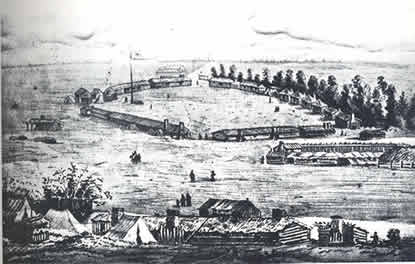
You may or may not know the St. Paul’s origin story begins in a time of messy sojourning.  The unpaved roads and commotion of the wild west.  I imagine it very much like the set of Dr. Quinn Medicine Woman.  Horses and wagons, dirt everywhere, the hard moments where you have to give up on trying to make life just like it was where you were with the paved roads and what not.  Here where you are you have to make good things work with what you have right now.  

If I remember the St. Paul’s story correctly, the motivation isn’t told as deeply holy or spiritual. It wasn’t the holy woman coming through and saying ah, this is a holy place, let us set up an altar and worship here.  The way I remember the story, there were some fellas in a saloon  deciding that in the midst of the messiness there should be an Episcopal church. Allegedly the first meetings were in that same saloon, where there was fussing about the improperness of the tobacco stains on the wall, and the practical if also gross solution. (They 'painted' the whole wall with tobacco spit.)

A saloon on the frontier was about many things, some less virtuous than others. But it was certainly about resting, eating, and friendship. A place to tell stories, to be refreshed,  and dream dreams.  This is a good origin story for St. Paul’s.  It is good because it means that in our deepest roots are not set apart from everyday life and that our deepest pattern is a mission of fellowship, feeding and lay leadership.  In the beginning, we began in a wild west saloon, and it was good.  

The profile committee and Vestry is deep in its work telling our story about who we are now, who we have been and who you are called to be next.  There is anxiety in this moment, both inside and outside these walls.  I don’t know if we are in the crisis point of Exilic vulnerability. Sometimes that sense of the doomed seems for certain, moments when I repeat to myself to be brave, hold fast, keep speaking the truth even when I want to hide.  Other times, I know that sense of rest and sabbath, I see the skies are blue and the temperatures pleasant and the cherries are ready!  

It is a three part dance, a both and an and,  and a something else less quantifiable.  Which is rather like that mystery of the Holy Trinity.  I could flood your ears with explanations of the doctrines about substances and essences. People fought and died for those formulations, so in their memory perhaps I should, but luckily for you I will not.Because as valuable as the complexities are, the basics are about as much as most of us need to know God.  After all the point of the Trinity is not to know about God but to know God.  So let’s just review the basics.

You have the big G God who creates it all, who seems to be way out there and way in deep. And there is Jesus of Nazareth, God born as a person in a certain time that we can find on a calendar and a place we can find on a map, who is somehow the very image of the big G God, who somehow is my friend and companion through the Spirit.  So then there is the Spirit of God who moves us and comforts us and fills us with the most sacred breath and is close at hand and is the same as the way out there and the fella back then.  Beyond that is a whole lot of mystery
that maybe words can never express, like no words can ever really describe what it was like before the beginning began.  Yet here it is.

And so to is the experience of the sacred Trinity,  hat somehow we know God the Father, God the Son, and God the Holy Spirit in their concreteness and their unknowingness. It can make absolutely no sense and at the same time for me, God makes no sense without it.  I am grateful for the Trinity, for its formulations and its weirdness, for its expansiveness and its inclusiveness. For its stillness and its perpetual motion. There are ways in which we are much like those ancestors in faith who crafted and shared these first sentences of Genesis. People who were wondering about where we come from to try and place some shape around where we are going.
 
I invite you to keep thinking about that frontier beginning, knowing that somehow, someway, you are right there with them sitting at that saloon bench start. There is freedom in the messiness of finding ourselves there with them in the wild west. There is energy in letting go of old things so you can discover the new things God has in store for you.

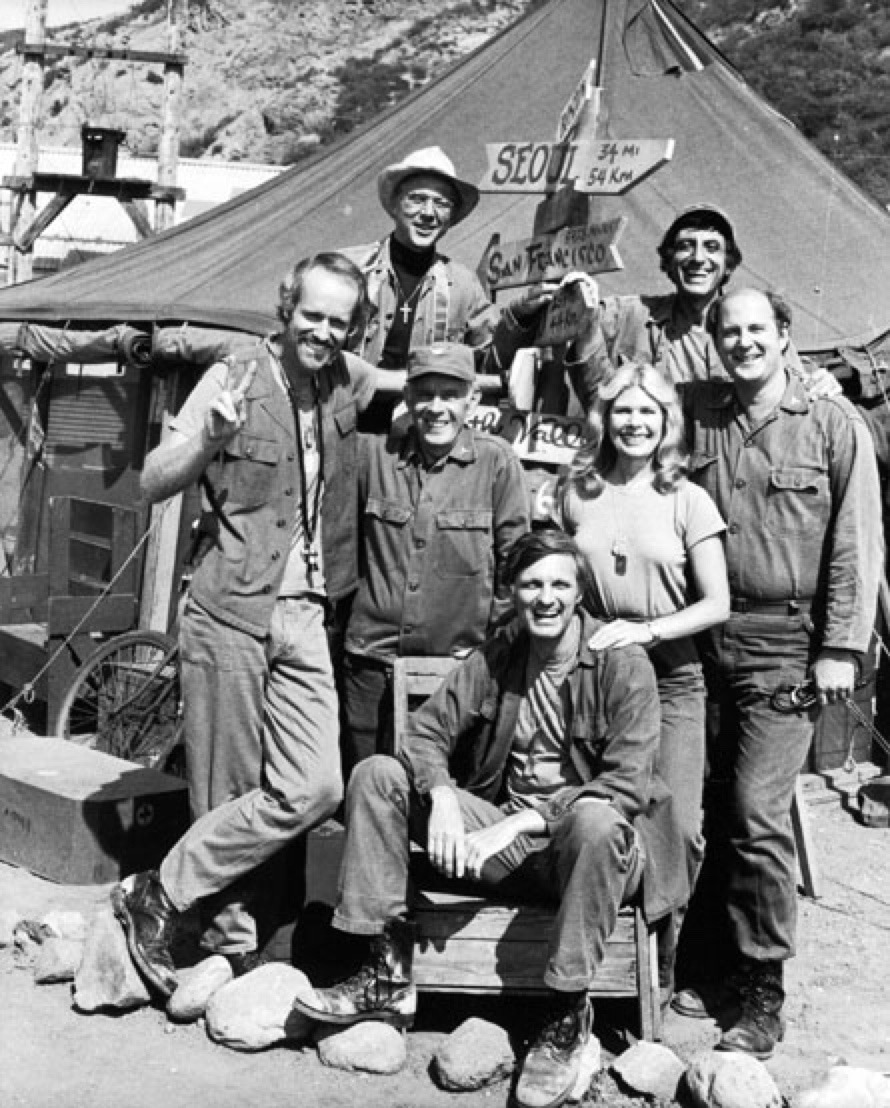
What friends are telling truths and which strangers are dreaming God’s dreams? How can remembering ourselves as saloon guests lead us into continuing to be the Jesus movement, and the Jesus mambo and the Jesus MASH unit in the Walla Walla valley today? For me the greatest gift of the Holy Trinity is that I don’t have to have all the answers, but that I am invited into a relationship with the past and the present and the days to come. It is a gift that we experience the triune God as dancing and dwelling and breathing with us in our history and in our now and in our future. And it can be very very very good.

Let us pray.
Gentle us, Holy One, into an unclenched moment,
a deep breath, a letting go of heavy expectations,
of shriveling anxieties, of dead certainties, that,
softened by the silence, surrounded by the light,
and open to the mystery, we may be found by wholeness,
upheld by the unfathomable, entranced by the simple,
and filled with the joy that is you.
In the name of the Holy Trinity,One God, Father, Son and Holy Spirit, World without end. Amen  


(prayer by Ted Loder)

St. Paul's Episcopal Church
Walla Walla, Washington