Sunday, August 30, 2020

Lists that Help Us: Abhor Evil and Bring Water to Your Enemy

I like a list. When I am anxious and out of sorts, making a list of what needs to be done, it helps. I have a friend who keeps Excel spreadsheets of everything she owns. It brings her peace. I am glad there are people in the world who keep things in such fine order. I am glad she showed me how to use Excel many years ago, And I like lists, but not that much. Some people see a list and it creates anxiety The very judgment of the list seems to foster a stranglehold of panic. Where do you land regarding making a list? For me a list is A breath of order, a vision of possibility beyond the anxiety. 

Our reading from the letter to the Romans could be made into a list. A full-time job description kind of list for the genuine Christian community - both as solo organisms and as a collective. Let us review some of that list. Abhor wickedness. Pursue Hospitality Feed your enemy. Vanquish evil with good. Be at peace with all. Love with fidelity. Provide Rejoice Endure Devote Weep Listen. Paul is diving deeply into what it means to be people of the Way, exploring the attributes of the movement that clings to Jesus as the Messiah. This Romans lesson is a tremendously helpful list. A working active Christian practice should rely on just such a growth and service mindset. Too often people say I like your Jesus, but I am not so sure about your Christians. And when they say that, it is probably because this list is what we are stumbling at living into. 

My guess is that there are some of these that many of us find to be at least reasonably achievable. Cling to the good sounds like coasting downhill. And each of us has different ones that are hardest. Bless those who troll and trample you? Ignore them sure. Not actually try to cause them grief? Yeah. Bless - pray for their well being- give water to those #$%#! ? Oh oh oh that is hard. Both when it is big impersonal evil and when it is the bully next door. Bless and feed my enemies?  It goes against so much in my personality and enculturation. 

So I am returned to the list - and I wonder what if we were to take this list and focus on one a day. Practice it in your life, and go one step further - take the time to reflect on your life and history and identify the name of one person who exemplifies each Christian duty. Hold them in prayer, wherever they might be. The list also can serve us as a mirror, a confessional prompt. Where have we not met this list? I was recently thinking about a different old friend.  She was certainly much more a friend than an enemy, but in my judginess and by silly issues where I thought we were divided, I had turned her into a frenemy in my mind. Sometimes offering water to an enemy is offering water. Sometimes it is having empathy. I  knew enough about her life to have done so. But back then I was much more on board with the do gooder part than the listen and forgive part of Christian-ness. 

Part of why the struggles of the early Jesus movement speak to us Is that we are still wrestling with what they struggled with. And some of our burdens are not that this way of life is new, but that it has over a thousand years of crud collected on it- what a friend calls the Constintinian hangover. In some ways even for some of us who have always been church people, we are meeting Jesus again for the first time. In the beginning, sometimes it is good to have a list. Pursue Hospitality Feed your enemy. Vanquish evil with good. Listen. Learn. Share. Follow Jesus, the Christ, the one Lord God of the Universe, who loved and served and died and rose again. We strive to live this list, we check it off, and fail to check it off, and we try again. 

This is the way Jesus loves & saves. This very list. What is the job description of those who love God? This very list.

CCRP 
#diopalove

Sunday, August 23, 2020

Not a Feeling Question: Who Do You Say that I Am

In our prayer for the pandemic era - Jesus stills stormy frantic hearts. Many of us connect who Jesus is with feelings - experiences of relief, connection, challenge. I am not sure that the sacred storyteller of Matthew is having Jesus ask us a feeling question. Nor is it a why do you like me question, but the life saving invitation of: who do you say that I am? 

Simon Peter excitedly answers - You are the Messiah, You are the big deal chosen hero who is gonna fix this chaotic storm of death and anxiety. Please do it now. This is Christ Church. Christ is the Greek equivalent of the Hebrew and Aramaic word we heard transliterated as Messiah. Saying Christ Jesus is like saying Queen Elizabeth - it is a role and a title, not a surname (or a curse word). Messiah, and therefore Christ, It sort of means oily head - as in one who has been anointed on their forehead by an ancient sacred rite One that marks an individual’s loyalty to God. Usually this is with olive oils steeped in resins and essential oils - what we would think of as chrism. This anointing is something you could see and smell. 

The Hebrew people hardly ever were a safe and sovereign nation. Their biblical history is one of constant threat and entanglement with the cruel grind Of this empire and that. Exploitation, despotic manipulation, humiliation, lies, death and destruction were constant. So too were the various hopes for a fix, a change, a messiah, a superhero to rise up and powerfully save the day. Powers that be don’t like messiahs. It was a dangerous nametag to be marked with. Some imagined a savior who would return everything to self-governing sacred order and conservation. Others dreamed of the One who would push us into a moral reckoning and the establishment of a just society for absolutely everyone. Messianic hopes were as varied and intense as the pandemic ending visions and conspiracy theories and strategies that circulate these days. Even the denials of the pandemic are in their own way a hear no-see- no evil shade of messianic hope. 

There is almost no part of the life, death, and resurrection of Jesus of Nazareth that matched any concoction of what his contemporaries were expecting in a messiah. So, of course, there were questions, and we are still wrestling with them. The paradox of Jesus being salvific through less violence, and his requiring our dutiful way of love for all to participate in this rescue - it isn’t the easy bake recipe we were searching for. 'Who do you say that I am?' is an invitation to consider:  how does Jesus change everything? How does he save? Plenty of people have been radical revolutionaries, or sacred healers, or sage prophets, or controversial rabbi’s. But I don’t know any of them by name or in my heart. 

It is the holy self-sacrificial servanthood of Jesus is his messiah-ship. It is the love That holds fast even as it is crushed by the weight of the falsehoods of the powerful and shamed by the bullying terror of the cross. So the question 'Who do you say that I am?' isn’t about memorized answers, it isn’t about our wish list so much as it is a challenging invitation. Do you get that this is not about a superhero swooping in and making everything easy? Jesus is your Christ - your messiah - not because he is yours, but because you are his. 

He gives us not blindfolds or battle plans but his way, truth, and life. I wonder - who do you say that Jesus is? If you haven’t ever been asked that before - give it some time…. But spend some time with the question. Journal or craft or research your response. 

Furthermore, what does it mean that the name of this congregation is Christ - that our name is ‘’Expectations-turned-upsidedown- Healing-feeding-learning-servant-leadership- Marked-by-God Church”? Christ Church, Ridley Park is many things but all of them should be one with Christ Jesus. The best of them should be informed hopeful and lifechanging for the last, least and lost. What does the name of Christ - Messiah Jesus - say about who we are called to be in this pandemic era? 

To hold to Jesus as messiah - the christ means to find ourselves in the company he would keep, the love he lived into, the servanthood he practiced. What if the rescue someone is looking for is the ways of Jesus they encounter in you? Jesus stills the storms, Jesus rocks the boat. Hear him ask your whole life The question once more: Who do you say that I am?

CCRP  #diopalove

Sunday, August 16, 2020

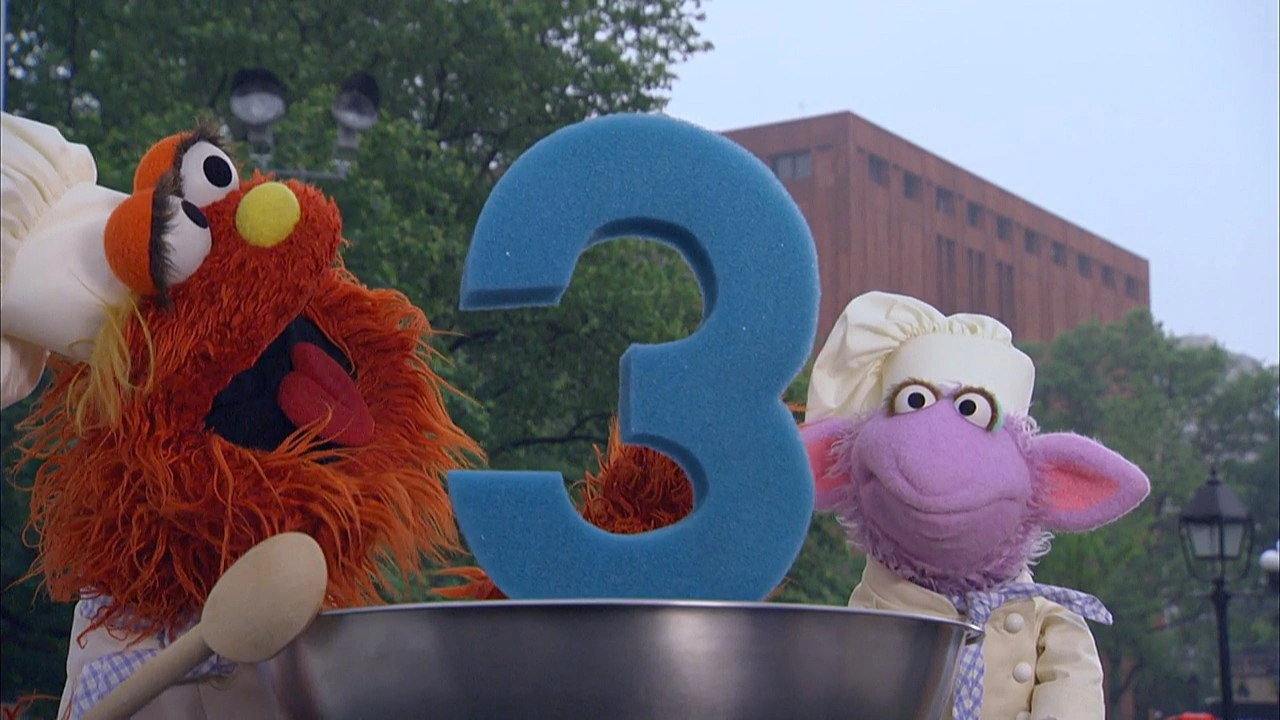
Brought to you by the Number 3: Egypt and Joseph and Holy Mercy

Egypt. Pyramids and the mighty Nile river. Early innovators Of centralized governance and writing and organized religion. The people, the lands, they are a crossroads of humanity with a long tangled history with every tribe and empire to ever set foot in the region. Usually in scripture, Egypt is either the big bad, or the neighboring power offering “help” against mutual enemies, an offer with more than questionable motives.  

Sometimes Egypt is Egypt (1). Sometimes it is metaphor: metaphor for any human power structure, in any age, human power structures that operate contrary to God’s intentions(2). Sometimes Egypt is a kind of euphemism, it might say Cairo, what it is referring to is Babylon or Rome (3). It can be all three in one paragraph of the Bible. Regardless, the reference isn’t usually a delight. When the holy family flee from Judea to Egypt it isn’t something that the knowledgeable hearer understands as a good thing. It is leaping from the fire to the frying pan. 

The story of Joseph is the longest and perhaps most detailed of all the sagas of Genesis. That 2-hour musical barely scratched the surface. The coat of stellar beauty and value stokes his brothers’ jealousy so fiercely that while they are deciding which sin to commit against him, Joseph is abducted and sold into enslavement in Egypt. Most of the story isn’t much of a virtuous example, that is why it made a good musical. God does not speak from a bush or come to anyone in a dream. God is only given a few directly attributed actions in the whole saga. Yet this is sacred scripture, a story given lots of precious parchment. Why? 

Part of the story it is telling is ‘how we became refugees’. Jacob and Leah and Rachel and Joseph and his brothers dwell somewhere in what today we know as Syria and Israel and Palestine. The twelve tribes of Israel - Jacob’s sacred renaming - are from there - so how did the primordial story of faith become their liberation from enslavement in Egypt? What the saga of Joseph tells us is that it is because of a mixture of soul-selling misbehavior topped off with natural disasters of drought and famine.  1. Some of that is a straightforward morality tale. 2. Some of that is metaphor. 3. Some of that is geo-politics;  some of that is all three at the same time. 

Here today in this critical slice of the Joseph saga we have a deeply sacred story about the easy path of wrong choices that lead to disaster, and the long journey of truth and reconciliation: both on earth with each other, and in eternity with God. Has there ever been a moment in your life where you were stunned by a reconciliation as Joseph and his brothers were? How do you notice God leading you and your neighbor towards such mercy? 

This week I hope you find a bible, or a children’s bible and revisit the saga. I hope you notice and reflect on something unusual about Joseph. 1. He is spoken of as Abba -like when Jesus says Abba - that friendly name for fathers and God.  2. He is referred to as lord - one who is in charge of the activities of an area.  3. He is even called a ruler, because he is one. Father, Lord, Ruler: lets say FLR. FLR should remind you a bit of the way scripture describes the one God of the Universe. 

The brother's relationship with this FLR was dismissive and dysfunctional, and at the start, consistently turned away from love and fidelity towards FLR. And here now - this FLR stands in tremendous earthly authority: and forgives. This FLR is overcome with emotion, he cries. Joseph - this FLR - acts toward reconciliation and acts toward feeding and acts directly to welcome his wayward brothers. 

Perhaps this drama-dey saga of Joseph is also a type of sacred contemplation about God and his mercy. In this wondering, God acts with and through everyday means and encounters: dreams opportunities failures droughts and motivations. God keeps working and leading the family of humanity even when our choices are contrary to what God intends. God’s frustration with his people is not without warrant, yet God’s steadfast love for humanity, the tears of mercy and compassion, the delights of reunion and reconciliation those have no end.

August 16, 2020
CCRP

Wednesday, July 15, 2020

On the Lips of Eve: Psalm 139

There isn’t a word on my tongue Lord that you don’t already know completely. 

It can be interesting to imagine Psalm 139 coming from the lips of Moses, or Eve, or Job. It actually sounds very much like Job, This psalm with its harmonic notes and painting in similar hues as the book of Job. What we hear today is the cosmic sweetheart song. The verses that were ‘edited for content’, those verses skipped in the middle are a different key: an even earthier intimacy, and, straight-up vengeful anger. ‘If only, you God, would kill the wicked, These people talk about you, but only for wicked schemes’. Whatever the situation that led to the elaborate artistry of this psalm, it bears a strong suggestion of persecution may be due to such wholehearted devotion to God. Yes, I can imagine the whole psalm on the lips of Job. 

Then there are the other verses we skipped, Earthy, feminine ones that invite me to imagine Psalm 139 on the tongue of Eve. God is certainly so close, right there walking in the garden in that primordial time before time. I can imagine Eve being furious at the forces that oppose God, It only takes a bit of coloring outside the lines, and outside the garden. However, she comes to mind more for phrases such as: God knitting us in our mother’s wombs, and other subtle playful references to the creation stories, both hers, and the seven-day refrain of it was good, it was good. And speaking of coloring outside the lines, there are also in this whole psalm some illusions to creation stories of other ancient religions. 

Yet what really connects Eve with this psalm in my imagination is the repeating of the word know. Seven times in the whole psalm. Know as in the source of the phrase biblical knowledge. It doesn’t always mean that, but it does always convey the kind of relationship you might have if you shared a garden with God. 

Psalms are high art, carefully crafted art - so that even if you have never felt such closeness with God something in the poetry delights you, causes you to lean in, hum that tune for just a moment. This psalm in particular is a decentering poem of big faith, perhaps bigger than you feel sometimes. Could you give voice to this psalm in prayer for someone in your life, someone who needs to know they are not alone, that they are beloved, someone who is so caught in the heap that they cannot even express such feelings? 

Psalms are art, but they are not silly. They are likely rooted in real experience. All the experiences of life: the orientation, disorientation, and reorientation of this continuing COVID-tide moment are known in the Psalms. They are ready to pray words we didn’t know we needed, singing refrains we know by heart but forget to sing. This song, this psalm, was deep knowing truth: true for someone like Eve, and like Job, and for Teresa of Calcutta and Martin Luther King, Jr. and you and me. What makes scripture scripture it has a way of knowing our truths and birthing our imaginations that are already but also not yet. 

There isn’t a word on our tongues that God doesn’t already know.

Christ Church, Ridley Park, PA
Episcopal Diocese of Pennsylvania
July 14/19, 2020

Wednesday, July 8, 2020

Seeds are Never Wasted

Mustard is a seed. At least when we usually encounter it. Most of the mustard plants grown on this planet are not grown for their greens which are edible and medicinal, but for their seeds. Seeds that get ground up and emulsified and some of you put that stuff everywhere. And then, what about sunflower seeds? Potent packages of nutrition and flavor. Ever notice how nobody worries when sunflower seeds get snacked on instead of planted? 

The parable of the sower is the opening of the sequence of parables that Jesus offers about what the reign of God is like. Reign of God is why we don’t just do whatever we want. The kingdom of heaven is what this all means in the end. 

The thing about the metaphorical storytelling of parables is that the outside is simple, the inside is profound. You are not supposed to eat the shell of the sunflower seed: it is a valuable container, but not the point. The prize requires breaking open the shell. When we break open the shells of Jesus' parables about the reign of God we notice four commonalities: 
  • that the reign of God is already present, 
  • it is all over the place, 
  • it is revealed in unexpected simplicity, 
  • and it demands our commitment in the middle of evil opposition. 
If we read this parable from an assumption that the one with the most full granaries wins, then we are perhaps eating the shell and missing the tasty food. Because the one with the most toys wins is not the way God's creation works. A seed is no less valuable because it doesn't become a sprout or plant. The reign of God is as ever-present as seeds - which are everywhere. Sometimes seeds sprout and make huge blossoms.  TBTG. And many seeds make our plates tastier: ever notice how many spices are seeds? And plenty of seeds get eaten by birds: and God seems to like birds! God keeps tinkering with that design endlessly - so seeds that feed something God loves is not a waste. And then, sometimes, seeds go back to dust and God makes use of that potency all over again. Alleluia. 

Mustard growing everywhere
Our reading today isn’t just a simple parable. It is also an interpretation of a parable, An interpretation that seems to be digging into frustration and disappointment. I've been thinking about the seeds of ideas and dreams that Christ Church had been fiddling with back in January. I have been wondering about the sparks of hope that I doodled in February. And how many of those seeds and doodles could have been amazing, and I grieve that we are not able to live into them. But the ideas - those seeds they weren't wasted. The nurture, the spice, the divine initiative, it lives on in new forms that we might not recognize yet.

2020 is not what we expected and certainly not what we wished. We have lost so many lives, 133,000 at this moment. It is wretched and we have much to lament, but I also believe we can act and pray and speak for living the love we are capable of. Jesus is working through our soils and seeds toward the reign of God, Planting in us what is needed for right now, and for what comes next. The reign is already (and also not yet), it is sown everywhere, it is surprising, and it demands our duty.  God is the sower.  We are seeds.

July 7/12, 2020
Christ Church, Ridley Park
Episcopal Diocese of Pennsylvania

Wednesday, July 1, 2020

Children, Wisdom, and the Marketplace

I always imagined a fountain. I imagine these young people playing around a fountain in the middle of this marketplace. What's in my imagination isn't a plaza in Jesus's day but something mid-twentieth century, maybe a little like a scene from Roman Holiday. I guess I imagine a fountain because of the connection with John the baptizer. Or maybe it's a place from my mid-70s West German childhood. The children I imagine playing certainly look like my friends, they sing the songs we would have sung and tell the stories we would tell. We all come to scripture with a lifetime of memories and art that fill in the space between the text.  What do you see and hear?

If you look beyond this imagined fountain in this marketplace, Jesus and some of his companions have come to get some fruit, some bread, whatever. Jesus and his friends run into some of curious opponents who are so intrigued or bothered by Jesus's holiness and teaching. So bugged that they just can't let him be.  In the background, these children could be singing what we would think of as a nursery rhyme, or it could be the equivalent of a pop song. They were not quoting Aristotle or uttering proverbs, however, Jesus raises their presence up to eye level. 

Childhood is a modern ideal. Of course, there have always been children, but the sweet darling vision of innocence that we might assume when we hear of children isn’t what Jesus’ hearers assume. Generally, people loved their children, the gospels themselves witness to such wholehearted familial love. However, the cultural norm, especially in the wider Hellenistic world, considered children in general to be on par with squirrels or stray dogs. Germy and in the way, a drain on resources until they could contribute, unfocused: plenty of the same critiques we might make today when we are quite frustrated with our children.  In this ancient situation the repeated New Testament use of children as a positive analogy for the way of discipleship - it would have gotten your attention because it sounded somewhat insulting. And here where children are raised up as carriers of sacred truth and wisdom, is stepping way outside the status quo. 

In 2012 a boy named Robbie was stuck at home, or maybe he was in the hospital again. When you have a brittle bone disease some times of immobility are just par for the course. So to keep him busy his older brother-in-law started a video project with him. It was a silly little delight intended just for themselves, a video of what a "Kid President" might have to say to anyone who would listen. Things like: if you can’t think of anything nice to say you aren’t thinking hard enough. And: give people high fives for just getting out of bed. Being a person is hard sometimes. It was a playfulness but he managed to same some things that apparently we need to hear.  The internet is our modern marketplace and that child, he uttered pep talks that went viral. 

One of the things that's changed since Jesus's day is sometimes we are more willing to hear the truth from a child than a peer. Especially a child with a muppet-like laugh and a sly smile. I believe a big part of the reason for this change in the embrace of childhood is because of Jesus himself. His very Incarnation, his humble birth to struggling parents in a backwater town: it changed how we see all children and our duty to them. We don’t inherit our world from our parents, we borrow it from our children. How should that truth, in the light of Jesus, shape our choices? What are they saying that we should hear? 

The scene we just witnessed in the marketplace has Jesus responding to his detractors saying, we just can’t win with you, because you are not even listening.  These children get something you don't.  He is also subtly repeating the fragility of his own life, the threat that he was under. The commentary regarding he and John, some of those bad reviews are punishable by death. Jesus whistles a tune of his own fragility in this life for being so transparent to God.

The very image of God's heart, Jesus doesn’t show up to issue report cards or reject the way we are made. He comes alongside our play fountains and our dark valleys. He sings along and welcomes us: the gluttons and challengers and the last and the least and the lost. He comes to love us all so wholeheartedly, to sing along with us so naturally, that our tune falls in line with his. 
Do you hear his song, and won't you sing along?

June 30/July 5, 2020
Christ Church, Ridley Park, PA
Episcopal Diocese of Pennsylvania


Thursday, June 25, 2020

Take Us By the Hand: God and Robots

Wall-E is the last functioning junk compacting robot on Earth. Perhaps you remember the lead character in the Pixar animated film of the same name. Humanity has trashed the planet, those that survive have flown away on an infinite interstellar cruise. That space pod of humanity has sent a robot back to Earth to search for signs of life. EVE is the slick advanced technology life detective Who arrives on Earth, And clunky, dirty, duct-taped together Wall-E is immediately entranced, even though she is distant, tightly-wound, and frustrated. Wall-E’s fascination with EVE is perhaps an illustration of the way some of us ordinary people feel when we meet someone of significant famousness or attractiveness or polish.

There are many ways in which our lessons today could connect to that film Wall-E, which if you haven't seen it you really should. What truly brought it to mind however is the full meaning of the word that we heard translated as welcome. We heard it seven times in three sentences. It can mean learning, to grant access, to not refuse friendship, and it can also mean to take with the hand. Wall-E has no other instinct than to receive this stranger, to show her his home to offer her his treasures.  And time and time again he tries to take her ‘hand’. She doesn’t understand the gesture, her arms and hands are held tightly, but again and again, Wall-E never gives up on welcoming EVE by taking her hand. 

Many of the Gospel stories that we know the outline of by heart are variances on the command of these few sentences. Most of the times that Jesus is at table are an embodied expression of just such an open invitation. The wonders of the loaves and fishes, the Samaritan woman at the well, the children in the courtyard. Just as Jesus tells us today seven times to accept him, this call to grant full access to his life and death and Resurrection - is repeated and repeated all over the New Testament, like it is God’s favorite movie. He's not just asking us to welcome the smooth and slick or the carbon copies of ourselves, but also the prophets those who speak truth to power, those who cast visions of who we need to embody God's Reign.  Jesus calls us to welcome, receive, to take by the hand the prophets of moral revival. 

We've been through the first three months of learning to extend our hands to one another in less literal ways. In the name of Jesus we've been practicing our discipleship #togetherapart. And for the most part, we will keep doing that. And yet this week for the first time in as many months we have the chance to take with our hands the sacrament of unity with each other, and unity with God in Christ. To take the bread that is a recommitment to our baptismal promises into our very selves. Those of us who gather will be receiving not only for ourselves but for all who for their own well being are choosing not to gather in person. We are together in the mystery of the sacraments, together in the mission of healing and reconciliation, and the commitment to be the concrete shape of Jesus in our neighborhoods in welcoming ways. 

Our Gospel lesson today even though it is prevalent, it has not always been the dominant practice of the whole church. If you have ever felt left behind on a trashed planet, if you've ever been treated like you are grime-y or outdated or too other, I am sorry and on behalf of the church in which I am a priest, I declare that we are sorry, that God loves you, wants to take all of us by the hand, and show us his true way. Jesus shows us over and over that we are to welcome you, just as God made you. 

One of the meanings of the Greek word that is translated today as welcome is learn. Interesting to think of how welcome and learn are connected. What we are learning and welcoming in this era of figuring out what it means that church is more than a building or a club? Church is a people-on-a-mission word. The church is a duty and a responsibility to welcome and learn the best practices for the common good … at the minimum. And in the middle of the curve is to welcome into our lives the life changing vulnerability Of letting Jesus take us by the hand. God is smitten with all of us, and like Wall-E is trying over and over to take us by the hand. 

Stay safe as possible, and at the same time, trust in God's mercy, love, and act on his command to welcome the last and the first, the slick and the clunky, the expected and the revelation. Welcome, learn, embody Jesus, he is trying to take us all by the hand.

June 23 and 28 2020