Sunday, February 24, 2013

Mother Hens and Bengal Tigers

If you set out across the ocean, either by boat or by plane there may be a moment, when you cannot tell the difference between the water and the sky.   No solid ground to see or step on; no fences to protect you. Now, consider what you might feel if you found yourself alone, on a tiny boat: in the middle of the ocean.   Alone, except for the Bengal tiger at the other end of your tiny boat. 

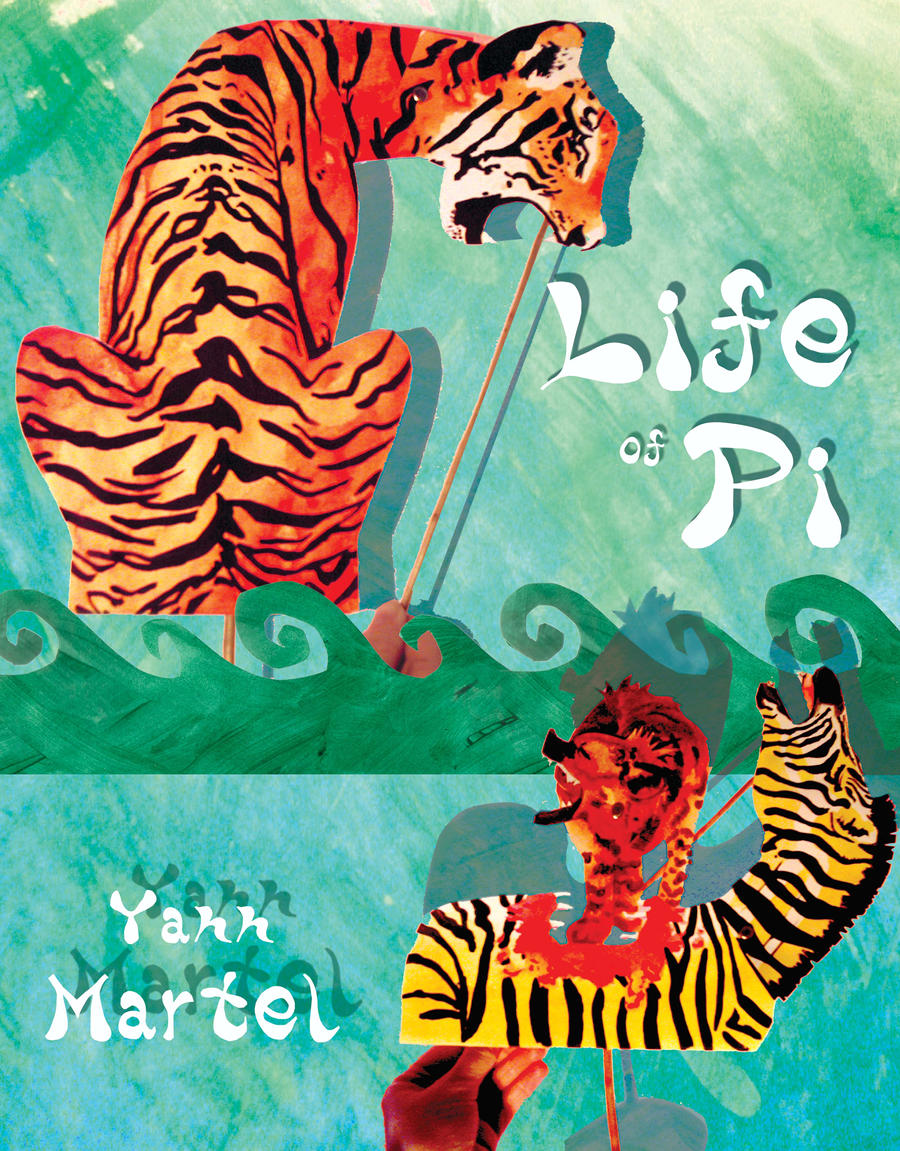
Perhaps you already know Pi Patel.  Maybe you have been with him on his epic voyage via the book, or the movie, Life of Pi.  Or maybe, you have no idea what I am talking about. Pi Patel is the son of a Zookeeper living in Southeast India in the 1970’s.  Pi, like the ancient Greek letter that looks like a small shelter. Pi’s father sells his entire zoo of animals to a Canadian, and he loads all the animals and his entire family on to a ship to sail them across the Pacific to their new homes.  Struck by a terrible storm in the middle of the ocean, the ship goes down and Pi Patel is the only survivor.  He finds himself alone and adrift, alone except for a sea sick tiger.

Did you feel the looming danger in our readings today? Just beyond our sight is a dark and terrifying night.  Abram is an old man in the desert.  A long time ago he heard God’s voice, he believed the angels. Now however, it is a wide open space on a moonless night and he is wondering what will become of him.  He hears God’s voice again And the Lord says that his descendants will number as the stars in the sky.
The light of those distant stars may be brilliant up close, but they are a long, long way from here. The emptiness is frightening. Those promises may be hard to believe.  Then we have Luke, who is leading us toward Jerusalem, tragedy and destruction hang in the air. Christ is the Lord, the Holy One, born in human flesh:  he heals and feeds and invites us to the Kingdom of God.  It is real and it is true and …some people just don’t believe it.

Luke knows where we are going and what will happen to our beloved.  And we fear it.  We like the man who heals us, who tells those strange stories, we like this Jesus who multiplies loaves and offers living water.  We do not like that he says he is going to die. We do not like that he is going to Jerusalem. Jerusalem is a city that killed the prophets, where Uriah, Zechariah, and perhaps even Isaiah met a bloody end.  There is fear and panic, a kingdom of anxiety.  We are scattered chickens running around the barnyard.  Just before our lessons today Jesus offers two parables: a mustard seed that grows into a tree with plenty of room for all, and a holy woman who pushes little tiny bits of blessed yeast all through the creation, enough to make an absurd amount of bread.  Come to me if you are hungry, there is plenty Jesus says.  But we are chicks running around a barnyard. We do not even stop when we ask him…will there be anything to eat?

Our gospel today is anxious because of two threats.  First, what lies beyond the barnyard. The fox that lurks in the dark, he is a fierce wild beast, for whom our flimsy fence is no hindrance at all.  Jesus proclaims that he has nothing to fear from earthly powers, but for everyday people that is terribly hard to believe.  Herod the fox is powerful, sly, and easily threatened. Mechanizations of power, or storms at sea, there are threats that are beyond our control. 

The second threat is our failure to stop and pay attention. A mother hen calls us by name and we cannot hear her over the volume of our lives.  She wants to hold us tightly and we just keep running in circles. We sense the first crisis…we know that there is a wild beast in that dark and empty night.  Swamped by panic and fear, we simply lose our heads.  We may even decide that our safety lies in making friends with the fox. Jerusalem, Jerusalem oh my beloved, I offer you streams of living water, and you ask if there is anything to drink? 

Our friend Pi has two threats as well.  First is the chaos that lies beyond the boat.  You sit on a lonely boath and there is nothing but a thousand miles of no one and nothing but water and her threats and her bounty.  You cannot drink the ocean, the salt will dehydrate you, and then you are nothing but tiger food.  So what are you to do?  His second threat is of course, the tiger.  The fierce wild beast that you share a tiny boat with and you cannot make friends with a tiger. 

It is Lent.  It is time to lift up our eyes and look into that dark and terrifying night. To name the dangers, the chaos and despair that surrounds us. It is also time to take a deep breath, to stop, to pay attention. Pi survives because he does not remain in fear and panic.  He remembers what he has learned that can help tame the tiger.  He uses the supplies in the boat to make clean water and gather food that he, and the tiger, may live.  

There is a third threat in the parable of the mother hen, the threat of fear itself.  The hen is the stone that the builders rejected, she is beloved, and she is to be sacrificed.  Can you hear the fear in this parable? Are you a mother or a father or a brother or a sister, and do you know that fear for the ones you love?  Is it his fear for us, or our fear for him?  From the grown up Pi Patel we are offered this advice. “Only fear can defeat life. It is a clever, treacherous adversary, how well I know.  It has no decency, respects no law or convention, shows no mercy. It goes for your weakest spot, which it finds with unerring ease.” 

So perhaps all these pressures are just one threat.  They are the dark emptiness of Good Friday, which we must pass through to RISE on Eastermorning.  Jesus asks us to walk with him when it is easy, and when it is terribly, terribly hard.  He asks us to believe with our whole lives, to offer ourselves to our beloved as much as he offers himself to us.  So I ask myself: What supplies are hidden in my boat, that all may eat and drink and live? Can I take a deep breath, lift up my eyes, and follow him when he calls? 

Jerusalem, Jerusalem! How often I have wanted to gather your people just as a hen gathers her chicks under her wings.  Why is it then that this can be so hard to believe?


February 24, 2013   Cathedral of St. John, Albuquerque

Sunday, December 9, 2012

Communion with Nick and Lucy

Traditions have to start somewhere.  A tradition is a habit that you cannot remember living without.  It may have begun last year, but now, it is a tradition.  You won’t find a Celebration of Nick and Lucy anywhere else. Traditions have to start somewhere! Today we celebrate and welcome Nicholas of Myra and Lucia of Syracuse: Nick and Lucy.  (For readers who were not in attendance: we had our guest ‘celebrities’ in the liturgy.  Nick in miter (even though that is inaccurate, historically) and Lucy in a crown of electric candles.  Thanks to Shannon and Stephen for their willingness to play along!) Nick and Lucy lived in the 3rd and 4th centuries, both along the shores of the Mediterranean Sea. He in modern day Turkey and she on the island you and I know as Sicily. As far as we know they never met; at least not on this side of eternal rest. Nick and Lucy sounds like the title of a children’s book. Two unlikely friends and their holy adventures in late antiquity!  Rescue sailors, aid the poor! Defy common sense by wearing lit candles on top of your head!

A Celebration of Nick and Lucy is my own innovation, no wait, tradition. And I must admit that it began in the middle of one of my ‘bah humbug’ phases. Not a ‘bah humbug’ out of Scrooge like coldness, or because of personal loss.  No, it was a bout of that December fundamentalism that strikes some of us from time to time.  Where I want to divide and conquer, where I am so appalled by some of the habits of the modern holiday season, that I that I want to take the season back. As if a season was the claim of any particular group.  Truth is that winter solstice celebrations are nearly universal across cultures and time. It is cold and dark.  Let’s get together and have a party; ‘because if you really hold me tight, all the way home I will be warm.’

So it was for our ancestors in faith who saw the parallels between the Good News and the passage of this island home around the sun. They started a tradition, they bonded the anticipation of the birth of Christ to the winter solstice. It is striking, and pragmatic.  In my ‘bah humbug’ moments I have to be reminded that divide and conquer is not the example to borrow.  We have two gifts in these overlapping festivals.  First an opportunity to proclaim Good News while hearts are warm to the radical notion of God born in human flesh, in poverty, to a young mother under the thumb of empire.  Second, is a chance to face unafraid the injustice we have made.  Advent is a bumper sticker that says ‘Jesus is coming.  Be Busy.’  The Lord is approaching, and we are supposed to be listening for God’s way to make a new path before it is too late.

So a few years ago I introduced Nick and Lucy, made them friends. I invited them to dinner, filled it with music and frivolity and all the winter wonderland the Advent police will allow.  We invite friends and strangers into a memory. We offer all ages an encounter with two saints in linen, two saints who were ordinary people, who heard Jesus say to heal the sick, and feed the hungry, and they did it.  With Nick and Lucy we re-member the life, death and resurrection of God-with-us, we re-imagine it through hospitality and table fellowship in a community of believers. It is a communion of saints in thought, word and deed.
The historical record for Lucia is thin, and rather contradictory. The historical record for Nicholas is much thicker, he was after all, a bishop.  However, his legend is also contradictory, and if you include the latter day appearances attributed to him, well his story is rather mystifying.  By the way, our guests transported via Tardis time machine know nothing beyond their 4th century lives, and much less do they know of any rumors of Nordic immigrations.

Why do I, and therefore we, offer this fresh tradition of Nick and Lucy? Why bring together two esteemed saints who each have their own days of remembrance? To begin they share so much, both Nicholas and Lucy are remembered for going above and beyond the call of Christian duty.  I will admit that it offers a wonderful gender and ministry balance: male and female, lay and ordained.  However, here is the best reason why.  It is because Lucy’s simple story shines light on the life and ministry of Nicholas.  Her story gives back to him his flesh, his heart, his bones.  She gives to Nick his true self, his ordinary, Christ-like humility.  He was after all a servant who did prepare in the desert a highway for the reign of God.

And it is his grand presence - both earned and embellished – Nick’s larger than life persona can raise Lucy up, bring her witness into our sights, it can raise the volume of her gentle service with sleigh bells in the snow.  Bringing them together, and bringing them here, we remind all ages that the communion of saints isn’t a once a year remembrance.  The communion of saint’s means that Lucia and Nicholas and hundreds and thousands more walk with us when we seek to do Jesus’ will.    
I am not going to tell you their story, Nick and Lucy are here from out of time to do that themselves at the celebration that follows.  What I will tell you is that they are gospel in a nutshell, they are the good news made plain in life and blood.  Our friends Nick and Lucy are embodiments of what the author of the gospel of Luke does so well: to proclaim the good news of Jesus Christ in word and action; and to do so clearly and simply, again and again. Salvation, alignment with peace and justice and the blessing of the creator of the universe: this gift is for all.  It is made real by following Christ out into the world.  Our Lucan gospel today assumes that you know that this is what is meant by paths made straight and lofty hills made low. Chapter by chapter Luke shows us again and again what the good news is and our role in it.  Because what if this was the only chapter you heard?  What if the only gospel you ever encountered was in the life of Christ’s followers? 

We are ordinary men and women.  Most of us, like our friends Nick and Lucy, are blessed with a multitude of privileges.  And like Nick and Lucy we are ordinary people who are drawn into Christ’s presence, who have chosen to follow him for reasons we may not be able to name.  I invite you to find yourself in their story, fill in the gaps with your own passions, fill your heart with their courage, believe that your faithfulness to Christ need not restrained by anything, not even gravity or common sense. Be Nick.  Be Lucy.  Go out into the world and make the rough places smooth and the crooked roads straight.  I offer you a simple phrase, for all from 1 to 102.  It has been said many times, and in many ways. Be Lucy.  Be Nick.  Let the tradition begin with you.

December 9, 2012                  Cathedral of St. John, ABQ
Advent 2B + Lessons borrowed from Nicholas and Lucia Feast Days

To learn more about my Celebration of Nick and Lucy send me a note!


Sunday, September 30, 2012

Listen: Revelation in Translation

Miss Jane. She said it with all the scandal a five-year-old can muster. Miss Jane. We don't say that word here. They say that word at my grandma’s church. They say that word at grandma’s church a lot. But we don’t say that word here. Maybe you can guess which word she was referring to.

Revelation. Do we read that here? Yes we read Revelation, 10 tiny sections over the course of the whole three year lectionary cycle. In honor of the feast day of St. Michael and All Angels yesterday, today you are given one more. We have before us one part of an otherworldly battle in heaven, which in the surrounding chapters involve our patron of the day Michael, and his Angels, and a great dragon who is also a serpent, and also the devil otherwise known as, well, you know his name. Satan. It helps if you say it out loud, in front of a lot of people. Satan. Demon is easier to say, it’s a common school mascot. People dress small children up as devils, and we think it is cute. In the original Hebrew the term,satan, is a verb which becomes a noun, The Hebrew verb means to “obstruct or oppose.” So the name of one of the angelic host becomes Oppose-r.

In the era just before and after the birth of Jesus there were folktales about these angelic beings in the heavenly courts and the one who challenges God's sovereignty. This angel is THE oppose-r. The first angels we encounter in the Bible are nameless humanoid messengers. Over time angels become many eyed and winged choirs, some had names, such as Michael and Gabriel, and they were all fearsome creatures who MUST greet us with 'be not afraid', because we would be.

We have flipped the channel to a show we have never seen, maybe sci-fi or anime...a show produced in foreign culture, with a voice over by a non-native English speaker...and we are confused, befuddled and lost in translation. The vision of angels ascending and rising and seals and white robes, what does all that mean? This is not a comic book or folktale. Our text may be beyond time and reason, yet it is still true. It is what happens if you think that 'life is hell' and then you pull the truth out of the metaphor, and you give it muscle, sight and speech. It is our inner battle with good and evil given form and voice.

Yet Why? Why is there a catch in my throat, why does my heart race when I say that name? Satan. There is this twinge of fear that I am summoning Beetlejuice. As if he will know where I am if i say it. Like Voldemort. I want to skip over it. Speak of accusers, evil, the dark side of the force, dark magic. Anything but S-a-t-a-n. That little girl was right; I don’t say it much, and I don’t say it easily. Part of my stumbling block is the misinformation that roams around about evil and so on, and the loud but inaccurate interpretations about what happens when all will be all in all. If you had to guess how many times the word rapture is in the book of Revelation how many would you guess? I will give you a hint, it is less than ten. Let’s see your guesses. Anyone with fingers up is, well, wrong. The word is not there. It is not in any reputable translation of the Bible. Zero. None. Nada. Surprised? Relieved? The monster at the end of the book is not what you thought it might be.

Revelation means to unveil, to reveal. The Revelation of Jesus Christ to John is really three genres’s woven together: an Apocalypse, a Prophecy and a Letter. Apocalypse, prophecy and a letter that is about one thing...faithful discipleship as the body of the living Christ in the face of unrelenting evil. Lets unpack those three parts a, p, l. A: Apocalypse - is a specifically late antique Jewish genre. An apocalypse it is not a one time kind of thing. It is opening a gift, breaking an egg, looking over the cliff, The Word became flesh and dwelt among us...the incarnation is an apocalypse. It is a radical unveiling. The purpose of apocalyptic writing is to sustain the people of God in times of crisis. It creates hope by offering a pointed and vivid critique of sin and oppression. Oppressors as unmanageable as empire, and as intimate as sin.

Revelation was 3-d before there was 3-d. It is art, written to be experienced more than analyzed, it is high def audio, it is not Morse code. Perhaps we should experience these Apocalypses like a political cartoon. A dramatic medium where everything is exaggerated to make an impression. Perhaps we could liken it to Stephen Colbert, going way over the top to demand our attention and to vividly pull back the curtains and furthermore, to direct our attention to a particular point view.

A, and now P: prophecy. Prophecy is not history written in advance. It is not something that is deciphered with decoder rings. This prophecy is built out of prophecies, gathering together hundreds of threads of the Hebrew Bible weaving them together into a stunning portrait of the challenges that the agents of God’s reign will face in every age. All these things have happened before, and all these things will happen again, until all is all in all.

A, P, L: Letter. Revelation is not so much a book as it is a letter. It is written to friends and loved ones at a distance. A circular letter written and shared in an age where reading and writing was a privileged vocation. This letter is intended to be read aloud in community, read aloud so that all who listen might continue through the tribulations of Christian discipleship. Our contemporary literate and enumerated minds may get in the way of our being able to experience this letter . We get so easily distracted, we grab on to what we think we know. Like numbers. However, the ancient relationship with numbers is not our relationship with numbers. 666 is not an MI-5 clue to the identity of a modern agent of evil. John exiled on Patmos doesn't care about the mechanizations of history in 1412 or 2012. He is solely concerned with the discipleship of the church in every age.

So what are we to do with Revelation? What we should do is listen. Listen to how the imagery sings to the imagination of our hearts. How it burns into our hearts the ways in which we are so easily led away from serving God and into idolatry. Idolatry is the primary concern of this letter of revelation. Idolatry is about what we give our heart to, what we love, what we serve. It is the opposite of proclaiming blessing and glory and wisdom and thanksgiving and honor and power and might be to our God. Idolatry is taking all those ideas and directing them away from God. Giving honor and praise to our stuff, our priorities, our power. Idolatry is what we stand accused of, so many goodies to choose from, so many millstones to wear.

Our experience of revelation should be a revelation. The sun rising and behold, our lives are thrown open wide. My silence, my stumbling through naming the evil that exists is refusing to take up my cross and follow the Lamb. It is cutting out my eyes and dismembering my hands. It is choosing to remain in the dark rather than standing firm in the light of Christ. Jesus' suggestion of maiming yourself is hyperbole. He provokes with vivid exaggeration to make our failures plain. Apocalyptic. If you are not using your lips, and eyes, and hands to breathe, and speak, and work as an agent of God then you might as well go for a hike. Hear no evil, see no evil….. is not gospel. It is deaf and dark, it is building up hell on earth. The topsy turvy bundling of images and experiences of Revelation, they should unsettle us. They confront us with startling angels with a message in many wings and eyes, be not afraid, the Lord is with you, you are chosen to bear Christ. Listen. Listen to Revelation. Hear that the description of the drama in heaven isn’t telling us about what is going on somewhere else. It is declaring what is going on right here, right now.

The conflict between the forces of good and forces of darkness is not fantasy. Sin, Evil, Satan, Revelation, Apocalypse. Hear it. Say it with a loud voice. Acknowledge our burden. Come before the throne of God here on earth, serve him day and night within his temple, which is the entire earth and cosmos. Step out on Christ’s word to give thanks and praise and honor and blessing, even in the face of unrelenting darkness. You and I and Michael and Gabriel and all the angels of God we are his servants, champions of light, we are called to oppose the oppose-rs, with our lips, ears, eyes and hands…however many we have. Listen for Christ’s revelation, step out to the edge with him, look into the empty tomb and be amazed. For then God will wipe away every tear from our eyes. Alleluia. Amen.

BCP 21 B and St. Michael and All Angels
September 30, 2012
Cathedral of St. John
Albuquerque, New Mexico, USA


Wednesday, July 11, 2012

Butterfly Garden

I used to sell upscale toys and games at a packed shop; $100 dollar tricycles, and Brio Trains. One of the activity kits we sold was called the Butterfly Garden.  An Ant Farm; but with butterflies.   You buy the kit and send off a postcard; one spring we tried it.  A few days later, a small brown paper box came in the mail.  It had air holes and a ‘live critters’ warning label.  Inside were four or five caterpillars.  We set up the box with clear plastic windows, and inside placed a fresh branch with green leaves and the caterpillars.  They crawled right onto the branch and started to cocoon. 


For three weeks, nothing happened.  Then all at once they began to break out.  The inside of the box was plain white cardboard, all around each cocoon the box was splattered with a thin red fluid.  It looked bloody.  It looked like a minor massacre.  Customers would stop to look in at the new butterflies.  Each time they were shocked, and amazed.  ‘Its so bloody’, they all exclaimed.

When I was 14 an MD told me there was ‘no such thing as growing pains.’  I told him, ‘that he had never been me.’  I have told that anecdote hundreds of times and almost every teen says ‘was he nuts?’ Maybe they are not verifiable, but growing pains are real.  The bones that burn with tension, the muscles that tingle with new life. Growing pains, physical and emotional, are real.  They are real for children and for their parents.  One day you have a child, the next a person you have never met.  Their first birthday is fresh in your mind, and here she stands going on a first date.  Angels announce a blessed birth and the next day your boy is in the Temple, debating with the elders.   It hurts to love like this; to love so much that the tension burns and the stretches tingle. With an average lifespan of less than 40 in late antiquity,  Jesus’ ministry from age 30 to 33 was a retirement career.  In his time the responsibilities of adulthood began soon after the body came of age at 13 or 14.  At twelve Jesus is experimenting with being a self-sufficient adult: why were you looking for me?  

We have placed a large box around the time from physical womanhood and manhood until social adulthood.   Sociologists say that the average age for the social markers of adulthood in our culture is twenty-seven.  Thirteen is the halfway mark.  For a multitude of economic and social and reasons we have fully grown men and women with virtually no responsibilities of adulthood.  Our bodies were created to do this: to become adult men and women.   It happens in its own time and rhythm, it is a gift from God and not earn-able.  Adulthood is about social and emotional maturity; Adulthood is taking responsibility for ones own life and the lives of others.  How we manage the creative power of young men and women between physical maturity and social maturity is one of the most troubling and amazing quandaries of our day.

In the liturgy that follows we seek to name that quandary, to name the growing pains for children, parents and the community.  In this Rite 13 we enter into this phase of great love and great anxiety with blessing.  We remember that we are not alone, loving fully formed creatures into fully loving adulthood.  We need this; nearly every culture has a rite of passage around the age of 13.  We need to name the change;  we need to remember that these young people are brimming with creative power.  We need to speak of the love and anxiety that this change brings to the surface.  And we need to pray that all creative power will be used wisely for the common good. 

The red fluid wasn’t blood.  Butterflies don’t have red blood.  It was the amniotic fluid of the new birth.  It took a couple of days for butterfly’s wings to stretch, dry and harden; then we were supposed to set the fully formed adults free.  The winds were strong and stiff.  There were airport delays for several days in a row.  We didn’t want to release these new butterflies into a whirlwind.   The winds made us anxious; it just seemed cruel.  We found a branch of freshly bloomed azaleas and even made up a little cup of butterfly sugar water food.  However,we knew we were pushing our luck, and the winds kept on roaring.  

Finally we had to set them free, or they would die in that box.  So we took the box to a protected garden at the hospital across the street.  We sat the box down next to a blooming bush, and we opened the lid.  Nothing happened.  The butterflies just sat there.  Then one flew out, and the others followed.  Straight up, and around, and out into the whirlwind.  They were beautifully and wonderfully made by God to do just this.  We watched, and we were amazed. 

February 12, 2006   Rite-13 Liturgy; 8:45am        Luke 2:41-52

St. Paul’s Episcopal Church, Fayetteville, Arkansas                        

Sunday, March 4, 2012

Learning To Love Differently

Lovely Book...Country Bunny & the Golden Shoes
Her pink sweatshirt said love in bold pink letters covered in tiny rhinestones.  It seems so undemanding.  Four letters, one syllable, two phonemes.  L – O – V – E. We throw the word around as if it were easy. Maybe you remember the Valentine exchange at school. Everyone exchanging cards and candy hearts emblazoned with sentiments charming, sappy and bold.  I love your pants.  You’re cool.  Be mine.  Yet, at a tender age we begin to understand that love can take all that you have and then ask for more.  Love can propel you up the highest mountain, and it can send you tumbling down. It tugs at your ankles and leads you to do outrageous, miraculous and ill-advised things.  ‘Jesus loves me, yes I know,’ ‘I am his beloved and he is mine.’  What does that really mean?  Does it mean that you send him a valentine?  Friend him on Facebook?  Can you explain your life without him? Do you love him more than your cousin, but less than Darcy loves Elizabeth, or Romeo loves Juliet? 

Passion, challenge, comfort, fear, tenderness, attachment, these are all very different things, yet they are all synonyms for love.  These days some folks might use an emoticon instead of writing the word love: I heart New York, I heart Wookies.  Love is the root of all comedy, all tragedy and all drama.  Love drives the Psalms, keeps Job on his path. Love compels woebegone weaklings to step out on his word, to leave our nets and follow him. We are lovesick fools.

I had no idea what I was getting myself into. How about you?

The gospel of Mark is not a gospel of pink rhinestone or candy heart love.  Some folks think of it as the CliffNotes gospel. For generations, Mark was considered to be a rough outline of Matthew and Luke.  However, contemporary scholars generally agree that it is the oldest of the Gospels and a carefully constructed one as well.  There is no shiny happy Jesus, no darling birth narrative and, in its oldest known version, no glowing resurrection encounters. Jesus is baptized. He journeys through Palestine teaching and healing.  He does such astonishing things and says such lovely things that people follow him. He is condemned by the authorities, dies on the cross and the Temple curtain rips in two. Done. From beginning to end, the gospel of Mark is a tightly-woven and, sometimes, harsh narrative of how God acts to break down the barriers that we have installed between heaven and earth.  The Gospel of Mark is without a doubt focused on two things: Jesus is the Son of God, the Messiah; and the challenging reality of Christian discipleship.   

Today’s lesson is just past the summit, the still-beating heart and continental divide of the narrative. From this point forward in Mark, the sacrifice of loving God’s kingdom becomes unmistakable. Jesus shows us again and again that we who claim him as Lord should not be able to define our lives without his life, which is both sacrifice and delight. From this midpoint onward, we will encounter fewer acts of power and more about the cross and its demands.  

When I am in charge of the universe I will decree that no lectionary lesson can begin with the word ‘then’— at least not without a ‘previously on.’ Even if you were here last week you still might not know what happened right before today’s ‘then.’   So…previously on the Gospel of Mark, Jesus and the disciples and possibly a crowd are on the road again. Jesus asked the disciples, ‘Who do people say that I am?’ ‘John the Baptist said one, and others say Elijah; or one of the prophets.’ He asked them, ‘But who do you say that I am?’ Peter answered, ‘You are the Messiah.’ Jesus follows this pop quiz with the reward that he must suffer, die and rise again. Jesus defines Messiah for them in words they can barely comprehend. 

We love you.  We love God. We love you so much that we have given up everything to follow you. We follow you because we believe that you are the answer to our prayers; that you will deliver us from our oppressors, that you will usher in a new era of holy peace in Palestine.  What do you mean that you will suffer, die and, goodness gracious, rise again? And what do you mean that to be your disciple is to embrace the same pain and trial? Jesus is the Christ, Christ which is Greek for Messiah.  Being Jesus the Christ is being a servant leader who becomes the holy sacrifice.  He has the victory not through violent power but through loving humility. It is this definition of discipleship, and therefore Christ’s Lordship, that Peter cannot bear to hear. Think of him as saying with immense love, "Lord, don't even go there."  

Jesus defines his messiah-ness by how much he loves us, and how far he is willing to go so that we feel it.  Furthermore, he defines our union with him by how much his life defines our life.  Lose your life to save it, save your life by leaving earthly concerns behind. If that brings you up short, then you are right there with Peter, trying to push earthly ways onto heavenly ways instead of the other way around.  CS Lewis offers us this reiteration.

Submit to death, death of your ambitions and favorite wishes every day
and the death of your whole body in the end: submit with every fiber of  your being, and you will find eternal life. Keep back nothing. Nothing that you have not given away will ever be really yours.  Nothing in you that has not died will ever be raised from the dead. Look for yourself, and you will find in the long run only hatred, loneliness, despair, rage, ruin, and decay. But look for Christ and you will find him, and with him everything else is thrown in.

All our activities proclaim certain ideas about what matters.  Every human life is a defining act about what is worthy of love and sacrifice. The challenge to lose your life is to let go of all the ways and means that clutter your heart and leave no room for Christ. It is to learn that our loving of life as we know it may be the closed heart from which we need to be healed. In the stories following the passion predictions in Mark 9 and 10, we see that the disciples, like us are unable to let go of their preconceptions of power and leadership.  They have opened up enough to name Jesus correctly, but they haven’t quite grasped his truth, that he comes to serve and share rather than dominate.

The very next occasion in Mark is the transfiguration.  The disciples get so excited that they say, ‘Hey, let’s build tents, carnival booths, display cases. Then we can all stay right here and be awesome and safe and no one ever has to get hurt.’ It is what we do with the things we love.  We try to make them stand still, remain as we think they should be. The disciples cannot leave behind their own understanding of what is worthy of our love, and what God wants us do with what we love. We are trapped in the cages of our own making, an invisible prison of loving the wrong things for the wrong reasons.  Our love for now gets in the way of being loved forever.  The original disciples want their love for God and their hope for a brave new world to lead to safer, predictable, and more comfortable answers.  Maybe you do, too.  Theologian Stanley Hauwerwas has this response to our love of a candy-coated faith:

You cannot know who Jesus is after the resurrection unless you have learned to follow Jesus during his life.   His life and crucifixion are necessary to purge us of false notions about what kind of kingdom Jesus brings.  In the same way his disciples and adversaries also had to be purged.  Only by learning to follow him to Jerusalem, where he becomes subject to the powers of this world, do we learn what the kingdom entails, as well as what kind of messiah this Jesus is. 

We begin each and every Lent with the reminder that our entire lives belong to God.  All this stuff, all these bodies, all of it belongs to God.  My question is: do you know what God wants you to do with God’s stuff? And are you willing to do it? God created the world and shouted, ‘I love you, I love you, I love you!’  He created us in a world of abundance, and there is more than enough food, water and shelter to go around.

What does God want us to do with our lives and our life together? And are we doing it?  Lose your life to save it.  It isn’t your life, anyway.  From Rite One, we are reminded that we present ourselves, our souls and bodies as a living sacrifice.  Everything that we are… this is our offering to God.  Through this we become Eucharistic people who break open our lives as he broke open his.

I want to share with you a segment of a poem by Marge Piercy called ‘to have without holding.’

Learning to love differently is hard, love with the hands wide open, love with the doors banging on their hinges, the cupboard unlocked, the wind roaring and whimpering in the rooms rustling the sheets and snapping the blinds that thwack like rubber bands in an open palm.

It hurts to love wide open, stretching the muscles that feel as if they are made of wet plaster, then of blunt knives, then of sharp knives.

It hurts to thwart the reflexes of grab, of clutch;
to love and let go again and again.
           It pesters to love consciously,             conscientiously, concretely, constructively.

Christianity can only be practiced in a community of imperfect people of imperfect loving. We are all learning to love differently, to love wide open.  It stretches our muscles; it hurts to stifle the instincts of grab and clutch.  Christian faithfulness is all about love, both when it floats like a butterfly and, more critically, when it is stings like a bee. Our desire for God and our promise to love others in Christ’s name should shape a community defined by bearing God’s self-giving love. Love gives the Christian church its cruciform shape and meaning.  

The early Church didn’t thrive because its music was pretty and its cookies were sweet. The early Church thrived because of how they loved. They stepped out into the night with food for the hungry and care for the infirm when everyone else left the sick alone to die. They stepped into the everyday realities of fear, hate and decay with arms wide open. The early church took on the burdens of the world in his name, they took up whatever cross they were given and asked for more. They loved contrary to every self-centered cultural norm of their age. They learned to love differently. An embodied love so deep and broad, that friend and foe knew exactly what they were up to.

The early church loved so loud that it was a secret that could not be kept quiet. They followed Jesus’ life and teachings so concretely, so constructively that the Empire that crucified our Lord could not stand in the face of his proclamation.  No rhinestones or clever marketing schemes, just living as he lived and loving who he loved. So…how about us?  If we were in their shoes—and we are—would we thrive? Let us uncross our arms and unclench our fists. Let us step out of our norms, utter fools rich with love for God and his creation. Love the boy with the pierced tongue and the girl with the colorful spiked hair. Celebrate the squirmy children and crabby seniors. Let us leave behind all the notions that keep us feeling safe, comfortable and caged. Do you want to keep this church you love? Do you want to offer it to generations undreamed of? Then we had better love larger and louder than this blessed organ, and serve more sacrificially than anything the Duke City has ever seen.  Decide to let go of the things that you think will save you, because nothing but true love of God’s beloved ever will. Have the courage to share this church which you love with your life. Let’s learn to love this time and place and neighborhood differently, passionately, loudly.  Dare to love the world as much as Christ loves us. Let us stretch our weakest muscles and walk with Christ so that all may rest in peace.

We said we would follow him as Lord and savior.  And he is watching. We said that we would seek human dignity in every dark corner of this broken world. And he is waiting. Let’s take on the muck of the human race and, together, you and me and whole darn mess will be transformed by his love. Present yourselves, your souls, hearts, minds and bodies. Present your whole lives as a holy living sacrifice.  Give back to God what is his anyway.  Ashes to ashes, dust to dust.

Learning to love differently is hard. He will take all that we have and ask for more. Thanks be to God. Amen.

Lent 2 B BCP              Cathedral of St. John, Albuquerque                     March 4, 2012

Sunday, December 4, 2011

Sardine Eschaton: Time to Go Home

How you ever played hide and seek?  Now have you ever played the game sardines?  For those who do not know, sardines is the reverse of hide and seek. One person hides, and the rest of the crew count to 20 or 40 or whatever, and then they go out in search of the one who is hidden.  When you find the hidden friend you stay with them, climbing into the cabinet or under the table with them. Every player searches until the entire crew are reunited, packed in like sardines. 

The challenge of the game is that it is very hard not to whisper,  to giggle, to expose an arm or a shoe, therefore giving away your hiding place.  However, when I lived in Oregon I served with a youth group  that could play this game for hours.  Not repeatedly for hours, but one game of sardines could stretch out forever, and they hardly new it had been any time at all.  The reason it would stretch is because they added a variation.  The person who was it, the person who was supposed to remain hidden would move.  One boy, his name was Mike, he was particularly skilled in this.  He would move around the building like a secret agent, never keeping still.  Just because you looked under the bell table and found it empty didn’t mean that he wasn’t there or wouldn’t be there soon.  Not only would Mike move, but as players found him the expanding cell group would move.  I would sit outside my office watching the game with gladness and watching the time with care.  As the parents cars lined up outside and as the evening wore on I would begin to point the way.  Did you look in the nave or maybe upstairs.  The game needed to come to an end.  It was time to go home.

April 2011 came and went.  There was no rapture, no cataclysmic rupture, no alien invasion.  You and I and the fella who got so much attention claiming it was the end of the world as we know it, we are all still here.  Yet…did you wonder?  Have you ever? Do murmurs of Mayan prophecies have you looking askew at 2012?  We all have ‘rend the heavens’ days once in a while.  Plenty of folks have ‘rend the heavens’ lives.  They shout at the Lord saying, come, come like a thief; dissolve the heavens with fire; topple injustice, wash away hatred and burn it all up; sweep the whole thing up into your loving arms, GAME OVER.  What if today was the day?  What if today was the last battle, kingdom come, apocalypse now? Christ has died.  Christ is risen.  Christ will come again.  We say that every week.  But do we mean it?  Or is it one of the moments when you take a deep breath rather than speak the words you would rather not comprehend?  Do we live our lives as if Christ is coming again?  Do we love our neighbors as much as God loves us?  All of them?  Do we practice our faith as if Christ was walking beside us, watching every move?  Do we live as if we could be called to account at any moment?   Maybe.  Or maybe not.

An immanent incarnate God is just to close, to invasive.  So we push him away.  Go back to the heavens and let me be just good enough to do less harm than the bad guys.  Come back later, when I call your name, when I need you to comfort me.  The kwazmanauka madness pushes us to embrace Emmanuel, God for us, and yes, we hold him close for a few sweet hours on Christmas Eve. But then we put away the crèche and we put God in his box and tuck it in the attic where we hope he cannot see what we have done and left undone.

The Greek word for the second coming is parousia.  What it means in ancient Greek is to be present; and in the New Testament it refers to God being all present, a time when God will be all in all.  It is the apocalypse with a capital A,  the kingdom of God fulfilled, the creation of a new heaven and a new earth.   There seem to have been plenty of people in the early church who expected the parousia within the lifetime of the first generation of Christians. In the second letter of Peter we encounter a community confused  and perhaps heartbroken by being still on this side of the eschaton.  In the same community are those who claim that the whole second coming is a myth.  Noting the delay they deny that God intervenes in the world, and they denounce the idea that there will be any judgment at all. An idea which sounds awfully familiar. 

We take pains to explain how we are not being judgmental, and it seems that we cannot bear to say yes or no,  or to claim right or wrong.  When this is true it is even harder to accept that God’s love and God’s judgment are the exact same thing.  Believers denying that our lives will be judged in the end, is that then or now?  We hear people say sure, God created the world, but he has since stepped back, God is a clockmaker who doesn’t intervene, God is like the force, not capable of having a relationship.  He certainly doesn’t walk among us in flesh and bone.  I’ve heard that disguised as good news.  Or how about this one: God wants us to be basically good and happy but would never chide, confront or lead us to put the hard work of righteousness before our own comfort.  These little lies didn’t die with the early church,  these parasitic falsehoods are as evident now as they were then. 

We are right to scoff at those who claim to know the day or the hour of the coming of the Lord, but we are wrong to sidestep his final revelation altogether.  To ignore that the day of the Lord will come, is to reject the testimony of the scriptures.  Hiding from the coming of God is to push away a God who breathed his own spirit into our bodies.  “Prepare the way of the Lord, to make his paths straight” has a two fold meaning.  What John the Baptist says points us toward the arrival of the Word made flesh in Jesus, and it is a call for us to prepare for the return of Christ at the end of the game. What does preparing the way of the Lord look like?  The author of second Peter says that we should be honest about who we are and who we are not. Making his paths straight means that we should be striving for the kingdom of God here on earth as in heaven.  He wants us to follow him home.  Preparing the way is not done through glossy tidings of comfort and joy, or by being meek, mild and non-judgmental.

The Markan Gospel begins abruptly, and moves quickly.  In today’s Gospel lesson we have no game of hide and seek on a silent night in Judea.  It begins with the main point, the gospel, the good news is that Jesus Christ is the source of our salvation. His life, that God lived on earth, that nothing is so far from God that it cannot become a bearer of the divine, this is deliverance.  What he taught and how he lived,  this is rescue.  That he died on the cross and rose again, this is victory over the ways of sin and death.  Sometimes the infancy narratives can get in the way, we let the cheeky shepherds distract us from the game Christ is really trying to draw us into.  The difference between this moment and the final consummation is that then we will no longer be able to push God away.  Then we will know that there is no distance between our lives and God.  We will know that he sees us just as we are.  If we do not want to be found wanting then each and every day of our lives need to be confronting the evil that crushes our neighbors and makes them feel as if they have ‘rend the heavens’ lives.

We cannot embrace the Christ child faithfully without living in the hope of his second coming. If the early church had pushed God away back into the heavens and out of our lives we wouldn’t have been led to practice good news.  To build hospitals, to open schools, to share food with those in need.  And if the early church had stayed hidden, waiting for God to come again and bring this world of war and hate to a quick and fiery end, if they had stayed hidden we wouldn’t have a church at all.  The time we have for amending our lives and repairing the world is now.  Christians believe that transformation belongs to God,  and that we belong to God,  so that our daily work in the church is participating in that transformation: personally and corporately.  We are to be shaping our lives and our communities in the practice of Christ’s own self-giving love.    It is in participating in the mission of God  that draws us into his kingdom.  The mission of the church is the mission of God, therefore our goal is the final universal union with God.

The birth of Christ should confront us with the ultimate reality and meaning of our lives.  Is it following him or is it molded by something else?  Are our lives directed by selfish comforts or selfless serving?  Faced with the first coming of the God we have a choice to make: to continue in darkness or join him in pursuit of his final victory.  We have to choose to stop playing hide and seek with God.  We cannot climb the Christmas tree and hope he doesn’t look up, and we cannot tuck him away on January 1 and hope he doesn’t look down.  We have to stop believing that we can hide from him at all. 

The game is not hide and seek, it is more like sardines.  The goal of this game is a glorious reunion: he wants us to find him and be found by him.  By his grace there will be a time when you and me and he and the whole world is gathered close to him, giggling under the bell table as if there is no time at all.  It might be in a millennium, it might be next year.  We simply cannot know when the day of the Lord is, so we must live as if it is today.  Behold the Lord God comes with might, he will feed his flock like a shepherd and he will gather the lambs in his arms.

Amen.

Advent 2B, BCP
December 4, 2011
Cathedral of St. John
Albuquerque, New Mexico, USA

Tuesday, October 12, 2010

Someone's Knocking at the Door

Knock Knock.  Maybe you remember Russell the young Wilderness Explorer from the movie Up .  Ernest young Russell who comes to cranky old Mr. Frederickson’s door.  Knock Knock.  Good afternoon.  Are you in need of any assistance today? I could help you cross your yard.  I gotta help you do something! Mr. Fredrickson says no, I don’t need any help, and he slams the door.  Knock Knock.  This child does not go away, he does not rest until he can help. 


Jesus tells us that unless we seek the Kingdom of God with the heart and passion of a child, we will not find it. He says ‘truly I tell you, whoever does not receive the kingdom of God as a little child will never enter it.’  Children know a lot about persistence.  Maybe they ask to many questions, or pitch a fit when they cannot get what they want.  Children know about persistence.  Today we encounter Jesus, the Pharisees and the disciples deep in a dialogue about the Kingdom of God. They ask Jesus the questions we still ask:  what exactly does it look like, where is it and how do we get there? 

Jesus tells us a parable, a story within a story, something quite short and strange.  He begins with the clue that we are to pray always and never lose heart. Prayer is not like making three wishes, or throwing coins in a fountain.  Prayer is responding to God’s desires, by thought and by deeds, with or without words. Jesus instructs us that we are to pray always, so that our whole lives are directed toward God’s kingdom. We are not to sit down, we are not to give up.  We are not to play dead and let someone else do the work.

In a city, somewhere at sometime, there was a judge who did not fear God and had no respect for people at all.  In ancient Israel the duties of a judge are clearly outlined.  His task is to maintain social peace, to decide disputes between all the people of his land, rich and poor, native and foreigner.  He is to hear complaints fairly and without prejudice.  The book of Deuteronomy states that judges are to
 “Hear out the small and the great alike and do not be intimidated by anyone for the judgment is God’s.”   Like a Hollywood villain we meet a judge who doesn’t care for God’s will or peace on earth. 

Maybe he lined his own pockets with the favors of the wealthy, maybe he had lost interest in compassion. He seems to be a cantankerous curmudgeon of the first order.  At the same time in the same place there was a woman who had lost everything.  A widow with no generous sons, or righteous brother’s in law.  She had no means of support, no man to speak for her, and no man to defend her cause.  Yet she knew that God will judge his people by how we treat people in need of help. 

The scriptures are clear, all people in the land are to be cared for because we were once slaves in Egypt who journeyed through the desert with no support.  God set us free and cared for us in our wandering and so we are to seek justice for those who wander now.  So this persistent widow comes to this cranky judge, she stands outside his house.  She knocks on his door.  Can you help me?  Can you help me?  Grant me justice.  Protect me.  Defend me.  Again and again she pleads her case, when she has no case by the standards of her time.  Something breaks through to the judge, seeps through the hard rock walls he had built around himself.  He is so bothered by the demands of this lowly widow that he chooses to grant her compassion. 

We ask Jesus about the kingdom of God and he tells us this parable.   He tells us that the reign of God is a place where the poor, the weak and the stranger are set free.  It is a place where the least of us is cared for, where the woman with no standing has a voice.  He says the reign of God is already within us, but it is also far off.  It is within us because we were created in the image of God, and given the basic rules of God’s way love god … love your neighbors (all of them) just as God loves you.  God’s kingdom is built by his compassion, built by his compassion planted in us.   The kingdom is also not yet because we fail to keep knocking on the door, we do not pray constantly.   We are exhausted, worn out by a million demands, wondering if we can live up to our promises. 

The classic understanding of this parable is that we are supposed to see ourselves in the unworthy widow, knocking at the door of the anti-God.  If this mean old man will grant you justice, how much more will our loving God hear your cry.  If we keep knocking, keep praying and serving and we do not give up the true God will respond with love and mercy.  All of which is true.

What if that isn’t the end of what we are to learn.  What if we are also the unjust judge?  What if it is we who do not really love our neighbors?  What if it is me who fails to do what I have promised? What if I am too busy with myself and my concerns to hear the call of those in need?  Who or what knocks at your door each night, pleading for help?  Is it mothers with nothing to feed their children?
Oceans in need of restoration?  What if the widow is like God?  Who is beating at our door, pleading day and night?


What if it is God knocking at our door,  shouting our name, calling us to help? Sometimes our practices of the Christian faith are like a young scout knocking at a stranger’s door, full of hope and enthusiasm.  Sometimes we are more like the lonely old man,  so lost in our sadness that we growl at the world.  Jesus invites us to live God’s kingdom, compelling us to pray with lips of hope and lives of mercy. 

The God to whom we pray is compassionate, but the prophets tell us he is also a little weary of watching us lay down in the road and play dead.  Where is the kingdom of God?  It is already within you.    God is knocking at our door.  Knock Knock.  Good afternoon.  Can you help me? Can you help me? Can you show me faith on the earth?

Probably October 2010
Epiphany Episcopal Church, Socorro, New Mexico