Saturday, August 12, 2017

Wonder Woman Baker: Parables and Outrageous Rising

We don’t know how old yeast is. Safe to say that yeast is much older than mammals, and it is also safe to say that it is everywhere.  All over grapes in the vineyard and on the apples in the orchard.Yeast may have been one of the first microorganisms collected by humans. Bread baking that produces risen round loaves is evident in the archaeology going back over four thousand years. Ancients couldn’t just buy paper packets of yeast like we might use at home.  Our forbearers kept and nurtured something like a sourdough starter.  A lump of wet ground grain can be left in the open air, so that yeast, or as we might say today wild yeasts, will land on it. Yeast is all over the place, ready and waiting.   

The kingdom of heaven is like yeast, which a woman took and hid in a bushel of wheat flour until the yeast had worked its way through all the dough. If this was the Wonder Woman of this parable (holding up a large Wonder Woman action figure) and she had a bushel of wheat flour, it would be relatively this much (holding a container of a relative volume of cereal). 80 pounds of flour. Now imagine the water or milk and oil and leaven you would need.  Imagine that yeast has done its work and this incredible mass of dough rising 2 to 3 times its original size.  No one person can make that much bread at one time, in one day. Not by ancient methods, just barely at the bakeries here in town.  The volume is outrageous. Which is a clue to us that this isn’t just an everyday story about an everyday person making some bread.

What is the reign of God like? It is like yeast. All over the place.  Unavoidable.  Ready and waiting to rise. And there is this wonder woman, I imagine her more full figured and jolly than this doll.  Hiding that leaven in that grain, not just mixing as it is translated in our reading, the Greek text says she hid it. Like jolly treasures that you cannot separate from all that surrounds it. Outrageous and daring this reign of God is, all over the place, indivisible from you and me and a strong armed baker woman ready and waiting to become bread for the world.

We also heard today about a mustard tree.  Mustard seeds are not really the smallest of all seeds, and neither do they make champion trees.  Mustard seeds are grown here in Walla Walla County. You may have seen their 3 foot high plant with yellow flowers, which you might refer to it as a bush, but hardly a tree.There are varieties that do grow taller, and are woodier, but certainly not a tree for climbing or a packed aviary. Once again the parable leans into the outrageous, garners the attention of the hearers who knew the plants well: Why in the world, what huh? What is Jesus doing with this one?

Jesus is illustrating the reign of God and therefore his mission as a tremendous life hosting tree connects it to that ancient Tree of Life of the garden of Eden, and the one of Proverbs 3 saying Wisdom, she is a tree of life to those who embrace her.  The reign of God is like that holy ancient tree with deep roots and tremendous branches. That in this case according to Jesus, is a mustard one. Mustard seeds which offer spiciness - excitement that opens your eyes.  And a tree that has healing and nourishment in her leaves. Taken together these two parables are not really about bread or mustard, but about Jesus himself.

Who are you we ask him again and again?  Here he connects himself with the Spirit of God, the Wisdom, the Sophia, the Ruach that brooded over the waters, that breathed life into formed clay. Open your eyes, the goodness of the Lord is all around you.  Here Jesus offers himself as a gigantic tree with limbs wide open, with enough bread for all to feast. It is not about the skills or strength of the yeast, it is not about the purity or the solitariness of the mustard seed.  It is about how God’s reign is from the beginning, even older than yeast, and just as much all over the place, hidden in plain sight, very close at hand. The kingdom of God should open our eyes, bring healing and shelter.  God’s reign is ready and waiting to be the agent of transformation with us.

We have treasures and seeds hidden all around for pursuing God’s reign, but how do we join with the wonder woman baker? Today when you leave I invite you to take a cup of cereal from the bowl in the baptismal font. Take that cup full and the small sheet of paper stacked beside the font with you on your way home.Divide that measure of grain into three even groups. With the first group list some gifts, skills, and knowledge that you or folks in this community are really good at or really like doing.  With the second group name places where people gather in the Walla Walla valley. With the third group name needs, real needs of this place and time. Then randomly take one item from each column and imagine like an outrageous baker. Daydream of the loaves we could raise by connecting these three ideas.

Jesus doesn’t say that the wonder baker just mixed the leaven into the flour and then didn’t do anything with it. Unbaked dough is fun to play with, but rather a waste of treasures in the end. So, I challenge you to work with your neighbors to try one of these daydreams. We cannot wait until the new bakery manager comes to activate the yeast that is all around us. There isn’t yeast in those gluten free cereal O’s,  but if you carry them home and leave them out on that piece of paper, even if you cannot see it, yeast will almost certainly show up there.  The reign of God is like a wonder woman baker who tossed yeast all over the place and is waiting with eager longing, calling us with sighs too deep for words, daydreaming about the rising of the children of God.

Let us pray.

May our hearts see through the surfaces
And glean the real treasures of everything that meets us.
May our souls glimpse the infinity
that hides in the simple gifts all around us.
And may we experience each day as a sacred promise
Ready to rise around a heart of outrageous wonder.
In the name of the Holy Trinity, One God,
Father, Son and Holy Spirit.
Amen.

St. Paul's Episcopal Church
Walla Walla, Washington
July 30, 2017
RCL, Proper 12, Year A, Track 1

(I adapted this prayer for the sermon from somewhere else, but given the weeks that have gone by, I am not sure where! The cereal activity adapted from Eric Law in the book HOLY CURRENCIES.)

Wednesday, July 19, 2017

Scouting in Networks: Ballplayers, Search Process, and Seeking Rebecca

Abraham’s servant was given no easy task. The slice of Genesis we heard today doesn’t give this servant a name. Earlier chapters list an important steward of the household as Eliezer, so let’s call him Elle.  Sarah has died, and Issac has come of age. The promise that Abraham’s descendants will number like stars in the sky as a light for all people, this promise seems difficult to win.  There is one son still in the household. He needs a wife.  

Maybe you imagine that Elle has a family himself.  We can certainly believe that his well being is directly tied to the success and failure of Abraham, his master. So Elle must set out, given a critical task with a high chance of striking out. Maybe you have been there.  A faithful employee or family member, given a daunting assignment on which it seems everything depends.

So Elle goes. Journey one week north, turn at the rock that looks like a hat, ford the river, and take the back roads, cross borders and go to Abraham's kindred, who may barely remember his name.  Go there to those people and find a partner for the heir Issac. You cannot go somewhere closer, to some other tribe. Go far beyond your comfort zone to find her, find this prospect who is a stranger of immense hope.  Get permission to bring this stranger back, and then journey again across dark roads and rivers and borders.

Elle begins this critical meeting with a prayer, it can sound a bit like making a wish with a coin, but it is wiser than that. Hospitality to strangers is a critical virtue among semi-settled desert peoples.  It isn’t just a move of kindness, but bringing water to strangers and their camels is an act of justice. Elle and Rebecca are like many servants of God then and now. They journey into the unknown and carry buckets and buckets of water.  Patiently, wisely and, daringly striving for God’s way.

I must confess that I experience a vast amount of sociological and historical distance from this lesson. I don’t have a servant, and neither did my parents or their parents. And then the idea that my parent would send a staff member to go choose my spouse?  Ha. And that the best and frankly only option would be to choose from my cousins? Good grief.  It is not my world. Yet I know we struggle with choosing our own partners wisely. And that sometimes, other people or perhaps algorithms do a better job of choosing well for long term partnerships. There is so much that gets piled into making matches, pragmatic or romantic, personal or professional. Families and legacies, hopes for the future, and heartbreaks in the past all flow into the request of Abraham and the search of his servant.

As many of you know we will be revealing the parish profile soon. We are opening ourselves to the anxiety and vulnerability of searching for a new partner in ministry. There are churches where this is done with auditions and voting.  There are also traditions where congregations and pastors have very little say in matches.  It might be fabulous if there was a computer program that could take all our data and all the data of all the priests who are open to a new call and churn out the perfect prospect.  But there is more to it than that.  There is something about personality and hopes and style that are precious but not reducible to search words and data. This process is a human process, and we have made sure it is a prayerful process. It is daring, revelatory and challenging, while also beautiful and hopeful.

The profile committee, or as some have nicknamed it ‘the sociology committee’ is wrapping up its task, and soon the crucial work will be given to the next committee, the Discernment and Review Committee. Their calling is rather like our friend Elle, Abraham’s servant.  Which is rather similar to scouting, not knots and hikes, but baseball. I was once the sound booth ‘volunteer’ for a large college baseball operation.  I say volunteer in quotes because most of the time I sat in the climate controlled production box and chatted with my friends. I did learn to run the soundboard, all those walk up songs and smashing sounds when a fly ball soars behind the stands, but I only had to do that in emergencies.  What I did more often was show baseball scouts around, and I got to know a few quite well.

I want to share with you two things about the work of baseball scouting. The first is that baseball scouts work basically on their own, but they don’t really. All the Scouts know each other, it is rare to see just one scout show up at a game.  They may serve opposing teams, but the success of the whole sport depends on more teams having good players. These guys are companions on the road, and it is more than just social.  Bill may not be looking for a side winding pitcher, but he knows that Ted’s team is, so when he notices a good prospect he shares his notes and observations. Baseball scouts rely on human networks to do the job right.  

In your search for the next rector there are statistics and search words and profiles and computer programs.  But the chances are that the priest God is raising up for you will be found in our Episcopal kinship-type networks.  I wasn’t looking for a new call when I first heard of Walla Walla. A friend of mine, who is a friend of St. Paul’s, he sent me the information, said I think this is for you.  I replied that looks so lovely with the trees and the creeks.  Nope, leave me alone. I refused the hint more than once. However, he persisted, and here we are.Unlike our Genesis story today, we cannot wait for the perfect person to appear like a fairytale. There is work to do, but the discernment and review will not be done alone it is being pursued with prayer and in large networks who want us to win.  

The second important thing I learned is that the young showboat ‘every ball over the fence’ person, isn’t very interesting if the other skills or the heart is shallow.  Brute strength fades in the rigors of long seasons. Furthermore, no one player can save a team. All the fantastic statistics in the world won’t bless a clubhouse if those stats belong to a person who doesn’t know how to evolve and doesn’t play well with others. What scouts seek are team players who know the game, who are generous and have a willingness to share and learn. All the time, every player on the team, every season and every off season.  We are both scouting and being scouted. 

There is one more thing I learned from baseball scouts that might matter for us in our practice as people called to be Jesus’ ball team.  For all the paperwork and video you can collect, there is something else.  A vibe thing, a chemistry factor, that whole picture beloved-ness that doesn’t show up in spreadsheets.  In our Old Testament replay today, Elle prays and seeks some very specific qualities, but perhaps in the act of prayer itself he invites the mystery of holy compatibility. The match is made quickly, yet in Rebecca the tribe gets something more than the skills listed on the profile.  She is no wilting violet, and she is how the blessing continues and is made real.  It is Rebecca who is the protagonist in the chapters ahead, directing the course of the whole season. She brings the skills, but she also brings something else. That flat out face in the grass diving for the ball devotion to God’s way.

So I have a few questions for us to consider:
  • How are we as Jesus mission teammates, what would a scout learn about us?
  • When God invites you into a hard deed, how do you respond? 
  • Do you pray? Do you reach out to the network?
  • Are you ready to be delighted by the call you didn’t expect but that produces blessings for God’s mission in this place and time?
    • If not, can you pray for the grace to get ready?
Let us pray.

May the forms of our belonging —in love, creativity, and friendship—
Be equal to the grandeur of God and the beauty of our souls.
May we know the urgency with which God longs to partner with us.
May we have the wisdom to enter generously into our own unease
And to discover the new direction this holy searching wants us to take. Amen.

Prayer Adapted from John O'Donahue

St. Paul's Episcopal Church
Walla Walla, Washington

Wednesday, June 14, 2017

Killer the Seal: Acts of Thecla and Being a Creative Compelling Witness

This is Killer, the stuffed animal seal puppet. You might wonder, why is sweet little guy named Killer.  We will get to that eventually, I promise. First, however, we need to think for a bit about the kind of document that the Acts of the Apostles is.  Outside of the biblical canon, there are Acts of Barnabas, Acts of Thomas, Acts of Rebecca and even Acts of Andrew.  Starting a title with Acts is sort of like putting the document into a section of the bookstore.  If you want a cookbook, go to the cookbooks. For the literary category of Acts, there really isn’t a premade placard for that.  You have to imagine a section somewhere between a spiritual superhero comic book and a telenovela.

The intention in Acts-type document is to invite readers and listeners into a creative and compelling story that inspires heroic faith and teaches virtuous living. We tell fairytales today, fairytales like the Little Mermaid, not because a singing evil octopus is expected, but to help us know that we can resist and defeat evil in whatever form it arrives. Acts-type stories are not told under any illusion of being verifiably 100% accurate, while at the same time they are also deeply and passionately true.

For example, let me tell you about the Acts of Thecla. Thecla is a young woman of means in what we know now as Turkey. One night sitting in her window,  she overhears St. Paul proclaiming the Good News in a home below.  She is so moved by this witness that she goes to him and declares her intention to abandon her fiance and her family and follow him sharing the good news of Jesus. When she returns home to tell her Mother about her change of faith, there is weeping and wailing and her family turning her into the authorities. After more time with Paul and run-ins with the Empire, Thecla ends up in prison and eventually is stripped of her clothing and tied to a post in the Coliseum, to face the public shame of a horrible death.  It is a terrifying moment, but her faith is so strident, and her virtue so self-evident that the wild dog which bounds in to devour her, it snuggles with her.  And the lion who runs toward this tasty treat, simply bows down and licks her toes.

Somehow during this trial in the Coliseum, she is unbound from the stake and Thecla goes running toward the exit. On her way to safety, she sees a pool full of aquatic beasts, and led by the Spirit she leaps in and baptizes herself in the pool of killer seals!  Thecla makes it out of the Coliseum and is reunited with Paul and his companions.  Sometime later she encounters her mother, who had thought she was dead, and after a time of reconciliation and proclamation, her cruel mother comes to believe and follow Jesus as the Christ.  See what I mean by spiritual comic book crossed with a telenovela?

Acts stories are fast-moving adventures, full of danger and amazing grace and extraordinary moments.  Lots of ancient leaders last days are told as Ascensions.  Good men who rose up into the clouds is a classic metaphor for telling that final chapter of the esteemed.  The idea that Jesus is giving up on gravity,  and now soaring past Jupiter  (people have done the calculations) is very much not the point, and contrary to physics.  The Ascension is about letting go of Jesus’ earthly mission and handing it over to you and me. It is a way to say he is no longer here in the same way, but he is still with us.  I think of it as he has been reabsorbed by God’s transcendent life, while in the same breath God gives us the Spirit to empower our part in the holy mission right here, right now.

The Ascension is a life-giving adventure that leads us beyond the everyday and into a deeper and broader reality that is beyond our limited senses.  The ancients knew it was both fantasy and true, maybe we can too.  We will soon baptize young Leo, and I promise there are no ravenous beasts in the font.  We will welcome him into a Jesus movement and a home in God that is life-giving and also surrounded by fierce challenges at every turn.  We will promise to support him in his life in Christ. How exactly will we do that?  What is Jesus calling us to let go of?  What are the lions and pools of killer seals that threaten and defeat us?

When I was in seminary my closest buddies and I would declare dress up days.  One time I decided to go as Thecla.  I had these pale flesh tone leggings and a flesh tone shirt.  I painted a few bloody scars on my face and arms. And I searched the neighborhood for a stuffed seal,  who I of course named Killer. We had been assigned the Acts of Thecla in our core classes at least twice.  Apparently, my classmates didn’t read as much as I did, because all day long I had to tell her story again and again.  I went to classes and meals and probably chapel in that costume, and it wasn’t until dinner time when spouse of our NT professor looked at me in my allusion to naked costume and fake scars and Killer seal puppet and said with joy,  ‘Thecla’!

My seminary was ecumenical, and that meant that I took classes with Baptists and Lutherans and Presbyterians and Jesuits.  One woman I told the story to was a Presbyterian acquaintance named Lucy.  She asked about the costume, and I told her about Thecla and introduced her to Killer.  And she laughed.  Years later when she and I had become friends, and she had been ordained an Episcopal priest she recalled that encounter to me. Lucy told me it was the day she decided that not all Episcopalians were as frozen, flat and boring as she thought and that maybe there was a place for her here.  I was a creative and compelling witness, but I still had to tell the story with my voice.  As self-evident as I thought it was, I still had to use my words to proclaim.

The intention of the Acts of the Apostles is to offer gifts of ways to be a creative and compelling witness in confusing and desperate times.  A vision of the many ways to proclaim Jesus Christ, who lived and loved and died and rose again and ascended into heaven.  Acts shares with us that this same Jesus who has ascended is also breathing and acting in you and me, right here, right now in a way that no timeline can explain. Acts wants to help you dive into the apostolic life, wants you to immerse yourself in the proclamation,  and dare to strive for God’s reign, no matter what.

It is rather like a spiritual comic book to help the church know it has holy superpowers.  It is rather like a romantic adventure to help you believe that nothing can separate us from the love of God.  There may be shades of the fantastic and the silly, but behind the adventure, there are real life or death moments where real people dare to choose Christ, who dare to step up to cruelty and hate in his name.  In the Ascension, Jesus has entrusted us with his mission. The big question today is, how will you act?

Let us pray.
May  we venture safely through every trial,
May our heart be daring, 
May our courage be steadfast,
And may our intention be deeply with you.
Holy Trinity, One God, 
Father, Son and Holy Spirit,
World without end. 
Amen.


May 28, 2017
St. Paul's Episcopal Church
Walla Walla, Washington

Names have been changed to protect the laughing.

Origin Stories Dancing: Saloons, Trinity and Good Starts

After the beginning began but before our beginning began, during the last ice age a glacial outburst from the northeast deposited meters and meters of precious soil in rolling dunes and it was good.  A long long time later a group of people settled in the middle of the many creeks below the mountains that are described as blue.  They called it Walla Walla. And it was good.  Later more people came from the east across the rivers and plains and mountains of this continent.  A town grew up in this valley. They are fruitful with their orchards and vineyards and educators, and it is good.

Origin stories matter to us deeply. They trace the mysteries of where we might have come from, but we examine them and tell them because we are trying to understand where we are right now and what comes next. Origin stories are rarely really about the beginning.  When we are in the middle of the story of our lives:  we are there in that story. Families and careers and surprises.  Bravely striving,  sometimes stumbling, and hopefully evolving for the common good.How it all began is a story that many people only explore when they have the time or need to do so.  Amongst people I know and love, I watch as they research genealogy when the children have left the house when there is more time to be still and wonder.  

There has never been an ‘on the scene’  ‘live report’ version of the creation of the universe.  It defies logic on an epic scale.  In days gone by, they told the story in one way.  Today we continue in that wondering by sifting through evidence and data and sharing theories.  We tell the tale of how the beginning began through telescopes and microscopes and Mars Rovers.  In our first reading, today are the opening sentences of the first book of the Bible, Genesis. Today we heard an older way of asking who we are and where we are going.

The first creation story of Genesis is a story we may have heard so often as to barely hear it anymore. Plus with some of the modern ludicrous things said about this story we might have become good at tuning it out.  But it doesn’t have to be that way. The best that scholars can tell this story doesn’t start at the start of the life of the people who heard it and told it.  It comes to be in words and parchment at a time when they were just figuring out who they were, where God is, and how they were to move and live and be as God’s people in the whole wide world.  

Like so many other core parts of the Hebrew scriptures, this origin story seems to be most shaped by the experience of the Exile.  Yet in that moment of brutality and death and destruction, this recitation doesn’t declare that all began in the terrible and ever will be terrible.  It offers instead a beginning of placid calm, it hears the whispers of a vision of a caring wise wind brooding like a mother hen over the raw materials.  This text celebrates each tiny facet in an intricate and crucial balance of pattern and sound.   All quietly but clearly stating that even in pain we dwell in a wonderful and beloved world. This rhythmic wondering at what happened before the beginning began doesn’t do so just to do so, but looks and wonders and tells as a way of digging deep into the hope of a more just future and concludes that we can be good just as the creation is good.  

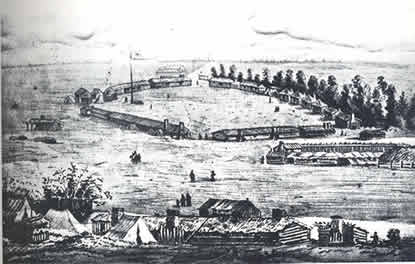
You may or may not know the St. Paul’s origin story begins in a time of messy sojourning.  The unpaved roads and commotion of the wild west.  I imagine it very much like the set of Dr. Quinn Medicine Woman.  Horses and wagons, dirt everywhere, the hard moments where you have to give up on trying to make life just like it was where you were with the paved roads and what not.  Here where you are you have to make good things work with what you have right now.  

If I remember the St. Paul’s story correctly, the motivation isn’t told as deeply holy or spiritual. It wasn’t the holy woman coming through and saying ah, this is a holy place, let us set up an altar and worship here.  The way I remember the story, there were some fellas in a saloon  deciding that in the midst of the messiness there should be an Episcopal church. Allegedly the first meetings were in that same saloon, where there was fussing about the improperness of the tobacco stains on the wall, and the practical if also gross solution. (They 'painted' the whole wall with tobacco spit.)

A saloon on the frontier was about many things, some less virtuous than others. But it was certainly about resting, eating, and friendship. A place to tell stories, to be refreshed,  and dream dreams.  This is a good origin story for St. Paul’s.  It is good because it means that in our deepest roots are not set apart from everyday life and that our deepest pattern is a mission of fellowship, feeding and lay leadership.  In the beginning, we began in a wild west saloon, and it was good.  

The profile committee and Vestry is deep in its work telling our story about who we are now, who we have been and who you are called to be next.  There is anxiety in this moment, both inside and outside these walls.  I don’t know if we are in the crisis point of Exilic vulnerability. Sometimes that sense of the doomed seems for certain, moments when I repeat to myself to be brave, hold fast, keep speaking the truth even when I want to hide.  Other times, I know that sense of rest and sabbath, I see the skies are blue and the temperatures pleasant and the cherries are ready!  

It is a three part dance, a both and an and,  and a something else less quantifiable.  Which is rather like that mystery of the Holy Trinity.  I could flood your ears with explanations of the doctrines about substances and essences. People fought and died for those formulations, so in their memory perhaps I should, but luckily for you I will not.Because as valuable as the complexities are, the basics are about as much as most of us need to know God.  After all the point of the Trinity is not to know about God but to know God.  So let’s just review the basics.

You have the big G God who creates it all, who seems to be way out there and way in deep. And there is Jesus of Nazareth, God born as a person in a certain time that we can find on a calendar and a place we can find on a map, who is somehow the very image of the big G God, who somehow is my friend and companion through the Spirit.  So then there is the Spirit of God who moves us and comforts us and fills us with the most sacred breath and is close at hand and is the same as the way out there and the fella back then.  Beyond that is a whole lot of mystery
that maybe words can never express, like no words can ever really describe what it was like before the beginning began.  Yet here it is.

And so to is the experience of the sacred Trinity,  hat somehow we know God the Father, God the Son, and God the Holy Spirit in their concreteness and their unknowingness. It can make absolutely no sense and at the same time for me, God makes no sense without it.  I am grateful for the Trinity, for its formulations and its weirdness, for its expansiveness and its inclusiveness. For its stillness and its perpetual motion. There are ways in which we are much like those ancestors in faith who crafted and shared these first sentences of Genesis. People who were wondering about where we come from to try and place some shape around where we are going.
 
I invite you to keep thinking about that frontier beginning, knowing that somehow, someway, you are right there with them sitting at that saloon bench start. There is freedom in the messiness of finding ourselves there with them in the wild west. There is energy in letting go of old things so you can discover the new things God has in store for you.

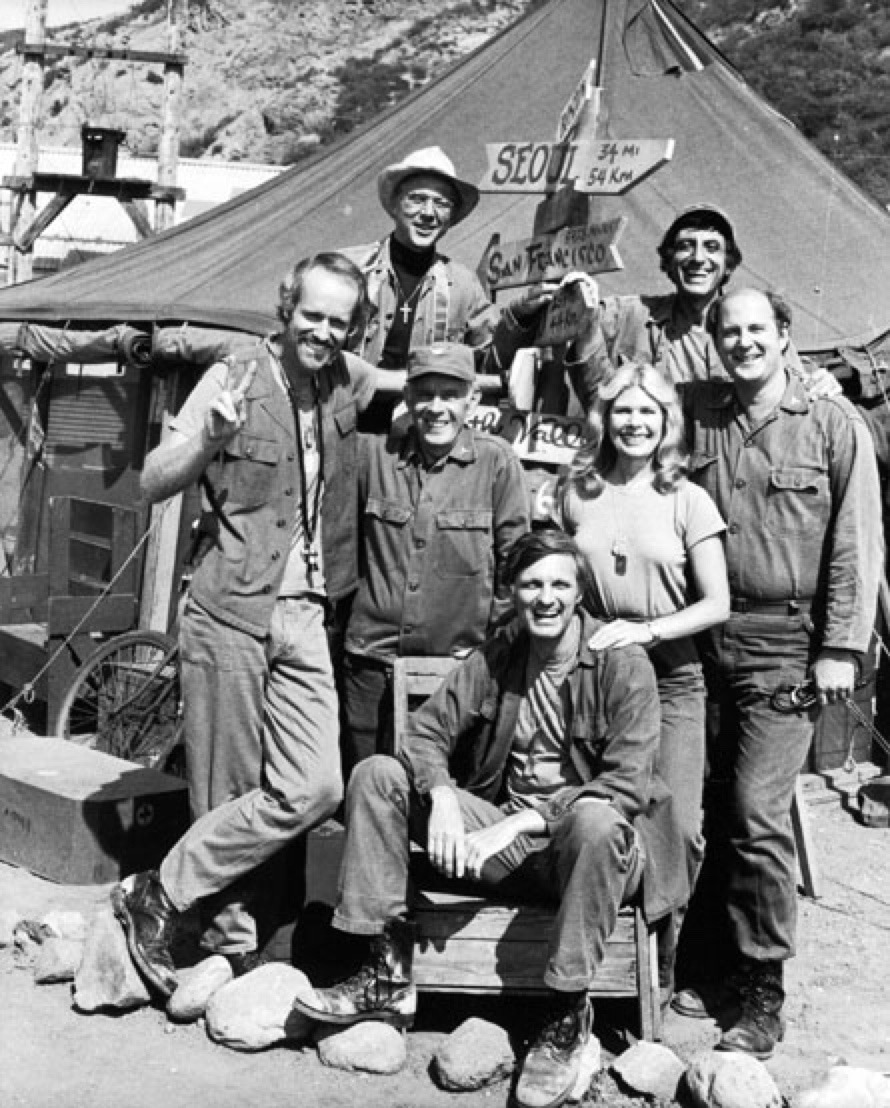
What friends are telling truths and which strangers are dreaming God’s dreams? How can remembering ourselves as saloon guests lead us into continuing to be the Jesus movement, and the Jesus mambo and the Jesus MASH unit in the Walla Walla valley today? For me the greatest gift of the Holy Trinity is that I don’t have to have all the answers, but that I am invited into a relationship with the past and the present and the days to come. It is a gift that we experience the triune God as dancing and dwelling and breathing with us in our history and in our now and in our future. And it can be very very very good.

Let us pray.
Gentle us, Holy One, into an unclenched moment,
a deep breath, a letting go of heavy expectations,
of shriveling anxieties, of dead certainties, that,
softened by the silence, surrounded by the light,
and open to the mystery, we may be found by wholeness,
upheld by the unfathomable, entranced by the simple,
and filled with the joy that is you.
In the name of the Holy Trinity,One God, Father, Son and Holy Spirit, World without end. Amen  


(prayer by Ted Loder)

St. Paul's Episcopal Church
Walla Walla, Washington

Sunday, April 30, 2017

Not Droids: The Life in a Psalm and the Road to Emmaus

Their heads were down, their hearts were tossed about. Looking back just hardly one week, they couldn’t recall very much.  Following Jesus, who said such amazing things and did such wonderful things, that they left their nets, and their stability, and followed him.  When they came into the city strangers shouted Hosanna as he passed. Such an upswing, then it all went wrong. He was arrested, and they didn’t know what to do.  Some froze, some ran, some lurked, some stayed. Our Jesus was tried by the powers that be and he was killed by the same.  Accused of rebellion and blasphemy, these two friends were known to be with him.  Maybe they wondered if they should flee the battle, or remain and resist?

Now at this moment, they are more confused than before. The women say he is risen.  That his tomb was empty.  Apparently, an angel told them ‘Be not afraid. ‘ Yeah right.  Not knowing what to do,  these two friends of Jesus left the city. When I imagine these two departing friends of Jesus, I imagine a barren landscape.  An empty road and sand dunes to the left and to the right. Shoulders hunched over, emotional blinders like a helmet over their heads.  Two friends traveling, rather lost in a desert, and very much alone is what comes to my mind. I see two people with little idea of where they are going or what they will do next.

Our imagining of biblical settings is influenced by many many things.  The clothes we wear and the wishfulness of our hearts,  the households we grew up in and art in all its forms.  I realized this week that the scene that is consistently in my mind for this walk to Emmaus is likely WRONG.  Because what I see is two friends on a desert landscape.   Jettisoned from a battle they didn’t understand, with knowledge they couldn’t comprehend.  I realized this week that what I am actually imagining is R2D2 and C3P0 on Tatooine.  Two robots escaping the chaos, a golden humanoid stiffly walking and smaller blue and white barrel rolling along on a lonely planet in the Star Wars universe.  A scene that is probably not anything like the road from Jerusalem to Emmaus.


In some ways the mash-up in my head is right, when we first meet those droids they have escaped a confusing battle, and it is fair to say that the experience of the disciples and friends of Jesus could have felt much the same.  The part where my imagined scene is wrong is the emptyness.  The actual Emmaus has been lost in the sands of time, but all the probable sites are within 15 miles of Mount Zion.  This Emmaus journey begins and ends in Jerusalem, the holy city on the tail end of the largest festival of them all, the Passover.  The roads in and out of Jerusalem would have been like a hive with bees in spring, coming and going in every direction.

There is much confusion and disorienting busyness in our readings today.  We begin with an Acts segment, where Peter is proclaiming what might be the first recorded speech of the Jesus movement.  It is a slice of the Pentecost speech, right after all that unusualness.  Then our Psalm is a Thanksgiving psalm, or at least it has all the parts of one.  But they are sort of out of order like someone dropped their essay and put it back together in a hurry.  Our texts are full of puzzles and problems and misunderstandings.  Our texts are much like us.  Real Easter stories, colored with the strangeness of proclaiming and following Christ as Lord in a world that all the while continues in its chaos and cruelty.

In general, scholars believe that behind many Psalms are real stories. Real moments when the cords of death entangled someone or some community. The Psalms continue to reach out to us, call us to say and pray them again and again, because we continue to find ourselves in them.  We can see in Psalms three directions: ORIENTATION, DISORIENTATION, AND REORIENTATION. (Bruggemann)  This Emmaus episode is rather like the full story we find behind a psalm of re-orientation.  It is that part of our story where we didn’t know what was going on, where everything seemed lost and overwhelming, and how through revelation and sacred community we were turned back toward holiness.

Let me tell you of one more part of the story that may not be in the text, but can be in our experience of reorientation.  I have a friend, let’s call him Finn. Finn is kind and good and fairly conventional.  But well, there is this social keep silent thing that happens in our culture.  Where if you don’t know something in a conversation or a lecture, it is pretty normal to just keep going.  Maybe look it up later.  Pretend like you know what is going on.   My friend Finn, he doesn’t seem to care about that social norm. He asks questions, all the time.  When we had first met I recall thinking, ‘I cannot believe you just asked that!’  We have wondered for a while how we became friends, and this made hold the clue. He was new to the Episcopal church, he had questions, and I tended to have answers, or at least knew where to find them.

The reorientation of Easter isn’t complete on this side of the tomb.  If anything Easter only creates a lifetime of questions.  If your last effort at having an inquiring mind in regards to your faith was long long ago,  it is time to be re-oriented,  God is calling you to make a u-turn.  If your most recent Christian formation experience was before anyone ever heard of R2D2 or C3P0, then you just might very much feel that you are all alone in a desert landscape, or even feel like a broken ship stuck in the sand.  

Last week we baptized young Ms. M,  and as part of that rite we make baptismal promises again.  The very first one is to ‘continue in the apostles teaching, in the breaking of bread and in the prayers.’  It is both a plain directive and a little bit of one that might need some clearer answers.  Continue in the apostles teaching means continuing to be in community studying scripture and tradition and experience and history.  Continuing to be explorers who are questioning and growing. Be like the apostles, people who got it right and got it wrong, but kept on following the Way and asking questions.


The Breaking of the bread promise is a little less cloaked, a promise to share in the sacramental life together.  Baptism is once, communion is again and again and again.  Same story, different key: God welcomes you and our neighbors, welcomes questions, seeks transformation and unity that we know can be found in common prayer and holy meals.  We are travelers on a journey together, feasting and asking and getting turned back around.  We do not have to be lost and lonely droids on a desert road.

Authentic practitioners of the way of Jesus are lifelong learners. I used to think my pal Finn and his questions were outrageous. Now I wish that more of us would name our questions out loud. I don’t have Jedi mind reading skills, neither does Andrew and nor will your next Rector.  We need your help. We need you to name the questions you have like you are sitting with Jesus and breaking bread.  What are your questions and how can we help you be lifelong learners?  How can we do our duty to help you continue in the apostles teaching and fellowship?

You can destroy the death star, not once but twice, you can have fireworks and dancing Ewoks, but tomorrow is another day and there is still bitterness and grief all across the galaxy.  The Emmaus story bears the orientation, disorientation and the reorientation of our life as followers in the Jesus movement. Easter is both the glorious triumphal ending, and it is only the beginning of our journey.  

We are on a crowded road together, rumbling with the middle of a story where the work of Easter is not over yet.  The movement will not survive placidness, and self-satisfaction, or heads down thinking you already know what you need to know.  Jesus has come alongside you in the crowded rumble of our life right now. Imagine that scene. Who is with you?  What is the landscape like? What do you want to ask Jesus? What might he ask of you?  Will you continue in the apostles teaching and fellowship, the breaking of bread and in the prayers? We will with God’s help.

Easter 3A - RCL
St. Paul's Episcopal Church
Walla Walla. Washington

Wednesday, April 19, 2017

That's So Metal: Tenebrae Shaped By Youth

Somewhere in the many writings of Fredrick Buechner is an essay titled something like 'Adolescence: The Stewardship of Pain'.  The essay was lovely, but it has been the title that has stuck with me over time.  Perhaps all life, perhaps all periods of stress and change could be understood more completely as a stewardship of pain.  Life can be wretched and denying it doesn't help.  Life can be wretched and throughout our lives, we hit the new miry pit moments and have to find a way to care for self and others through it.

They had a struggle to get out of the thicket.  The thorns and briars were as tough as wire and as clinging as claws.  Their cloaks were rent and tattered before they broke free at last.  ‘Now down we go, Sam,” Frodo whispered. ‘Down into the valley quick, and then turn northward, as soon as ever we can.’ Day was coming again in the world outside, and far beyond the glooms of Mordor the sun was climbing over the eastern rim of Middle-earth; but here all was still dark as night.  The mountain smoldered and its fires went out.  The glare faded from the cliffs.  The easterly wind that had been blowing ever since they left Ithilien now seemed dead.  Slowly and painfully they clambered down, groping, stumbling, scrambling among the rock and briar and dead wood in the blind shadows, down and down until they could go no further.
J.R.R. Tolkien

For many many years I have sought ways to more deeply involve young people in the practices of Holy Week.  I used to practice a young people's stations of the cross with things to touch and taste at each biblical station (which I should maybe write up sometime).  Here at St. Paul's for four years the youth group has offered the Tenebrae service.  Known as a service of shadows, Tenebrae dives into the brokenness and darkness of life that leads to the cross.  When I first began engaging the youth group in this service we had a handful of senior high boys who loved death metal music.  They described the service as the 'metal' service.  I had to ask a few questions (and read a few things online) before I realized how right they are.


This is where they fought the battle of Gettysburg. Fifty thousand men died right here on this field, fighting the same fight that we are still fighting among ourselves today. This green field right here, painted red, bubblin' with the blood of young boys. Smoke and hot lead pouring right through their bodies. Listen to their souls, men. I killed my brother with malice in my heart. Hatred destroyed my family. You listen, and you take a lesson from the dead. If we don't come together right now on this hallowed ground, we too will be destroyed, just like they were. I don't care if you like each other of not, but you will respect each other. And maybe... I don't know, maybe we'll learn to play this game like men.
Remember the Titans

The general structure is much like other Tenebrae traditions, and some of the prayers and readings come from 'authorized' sources.  We start with lots of candles lit, and shadow by shadow, more are extinguished.  Part of our youth ministry work during Lent is looking at each shadow and talking about the 'other' readings that go with them.  The 'other' readings are excerpts from films we have watched or books they are reading in school, or in personal reading.  We keep some readings from year to year, and others are changed.  In four years we have had excerpts from Buffy and Firefly episodes, moments from The Giver, To Kill a Mockingbird, Hunger Games, the Blind Side and even the lyrics to a death metal song.

“But they were not living, thought Harry: They were gone. The empty words could not disguise the fact that his parents' moldering remains lay beneath snow and stone, indifferent, unknowing. And tears came before he could stop them, boiling hot then instantly freezing on his face, and what was the point in wiping them off or pretending? He let them fall, his lips pressed hard together, looking down at the thick snow hiding from his eyes the place where the last of Lily and James lay, bones now, surely, or dust, not knowing or caring that their living son stood so near, his heart still beating, alive because of their sacrifice and close to wishing, at this moment, that he was sleeping under the snow with them.”
 J.K. Rowling, Harry Potter and the Deathly Hallows

My hopes for this service are two-fold.  First to involve our very busy young people in the real practices of Holy Week.  Secondly, to help create a practice of critical thinking about faith. Placing their experience and their leadership in the heart of Holy Week is one way to connect authentically.  We don't have the most preachy youth group, we are mostly focused on fellowship and geekiness; but always concluded in shared prayer.  We practice the rhythm of life together and I believe it is this approach that makes Tenebrae work.  Each season it doesn't take very long to come up with many many options each year, many moments of brokenness and challenge in the media.  We probably could fill hours with them.   Yet we choose just seven, seven quotes that are reflections of our lives, a way to name the pain without confessing too much of our own.  It is a service of shadows, and a service of hope.  The metal service, Tenebrae.

If you would like a copy of this years service, please contact me.

Tuesday, April 18, 2017

Three Mandate Thursday: Serve, Do, Love

Tonight is a night that does not need many more words to teach what it means.Like the principles of Godly Play, tonight we are immersed in the materials of these sacred stories.  We touch and feel and dive deeply into the holy word.  It doesn’t need many more words, but like our lessons downstairs,  I do want to offer a few heart shaping words. You may not know that the word maundy is rooted in the French word for mandate.  It is perhaps more understandable to call our night Mandate Thursday.  Jesus gives us three mandates this night: serve, do, love.

The first is a mandate of loving service.  I came not to be served but to serve, and you are one with me when you do likewise.  Washing someone is a fiercely intimate moment, and sometimes I think our anxiety about the foot washing of this night is less about the condition of our well to do feet and more about the intimacy it demands.  This is service that isn’t clean or comfortable or distant. Jesus’ mandate of deep muscular service to enemy and stranger is a daring invitation into holy vulnerability.

The second mandate of the night is ‘do this in remembrance of me’. What we remember this evening is often called the Last Supper. But that is confusing because while it’s not the first, it’s not really the last either.  So often when he appears in his resurrected glory his invitation is to a feast.  So I wonder what else could we call it other than the last supper?  What makes this supper distinctive is the mandate, so what if we called it the directive dinner?  This night is like and unlike most of the other times when we gather around the table, break bread, share wine and do so in remembrance of him.  Every week we are offered just a sample of the tastes, but in it we are given the full presence of his promise.  Small or large these meals are not about confessional statements or monstrous magics.  They are about the mystery of relationships made and deepened through communal food and communal prayer.  Tables are where we tell our stories, where we break bread and where we are transformed.

Here on this night family and strangers and friends gather, we hear these stories and say these prayers, we eat this food and become these people. Eat this, become me. Drink this, be united. Is there anyone you know well, who you would follow like Jesus invites us to, with whom you have not regularly shared food? Throughout Jesus’ life it is his table fellowship and his table stories that throw all standards of who is in and who is out right off the table.  ‘Do this in remembrance of me’ is Jesus’ mandate of deep table fellowship with neighbor and betrayer, is a daring invitation into a reconciled world.

Third mandate is to love as Jesus loves. Holy Week and Easter is very much about overcoming systems of injustice and cruelty and brokenness, but it is also not just about that. Holy Week and Easter are very much about the strange mystery of how Jesus is alive in us and present this very moment, but it is also not just about that. This week, this time, this day, practiced, again and again, is about God made flesh in Christ Jesus in whose life the lives and sufferings of his friends and followers are entirely bound up.  Jesus carries God’s healing presence into the the heart of human suffering and cruelty.  Love one another he says, he says it as he is being betrayed.  Love one another he says, as he is being scapegoated.  Love one another he says, as the worst of our anxieties and shame move us to strike him down.  Sometimes, most of the time, I can barely wrap my mind around the notion that God who loved us so much that he became one of us.  Became human knowing that the challenge of God made flesh would lead us to strike down this prophet, friend, messiah, Lord. How could God love such twisted and selfish children who respond to him in this way?

How is the harder question, it is a brain question, that may never be able to comprehend the answer.
Yet what the mind can barely touch, my soul can know by heart. Jesus’ mandate of living a deep abiding love for all that he loves is leaning in harder than we know how to do without having spent regular time with him in service and at table. Serve, Do, Love.  This is our mandate.  Jesus gives us not a question of how, but an answer of how.  Serve, Do, Love.  

 -
once again, the liturgy itself preaches much more than any homily.
St. Paul's Episcopal Church
Walla Walla, Washington, USA
April 13, 2017