Erik Erikson alerted us, now more than forty years ago, to what he called the dangers of 'destructive forms of conscientiousness.' imposing global preconceptions on the multitude of diverse personalities and motivations in a give group of children may be one of them. Rushing ahead too much to fill up silences when children hesitate while trying to explain something about their lives to us may be another. Children pause a lot when reaching for ideas. They get distracted. They meander - blissfully, it seems - through acres of magnificent irrelevance. We think we know the way they are heading in the conversation, and we get impatient, like a traveler who wants to 'cut the travel time'. We want to get there quicker.
Jonathan Kozol, Ordinary Resurrections
Some phrases leap out at you. Others stick with you. In this case this phrase about blissful wandering has stayed in my brain for the decade since I read it. It has also morphed in a predictable way. Just as how in compline I always say 'that awake we may walk with Christ' (instead of watch), acres of irrelevance became acres of irreverence in my head. I drew this image not long after I read that precious book. And I kept it. The book is about the children of Mott Haven, a desperate portion of the Bronx, it is about how and what we do and do not do for the children who are our responsibility, and the small Episcopal church that does extraordinary work in that neighborhood. Kozol is deeply wise about children, and I strongly recommend this book to religious educators and parents and pastors. Ordinary Resurrections is a reminder of the socio-economic forces that sacrifice our children more brutally than the fiction of 'The Hunger Games'.
In a chapter about the visit of Fred Rogers to Mott Haven, Jonathan Kozol continues:
'Mr. Rogers told me once that he regrets the inclination of commercial television to replace some opportunities for silence in a child's life with universal noise. At quite times, he said, "young children give us glimpses of some things that are eternal" - glimpses too, he said, "of what unites us all as human beings. He also said that after forty years of work with children, he does not believe that being clever is the same as being wise. These seem like observations that are easy to agree with and then, just as easily, dismiss. I hope we won't dismiss them.
Reflections, sermons, and other things by the coffee loving, beer sipping, baseball watching and nomadic church lady.
Wednesday, May 29, 2013
Tuesday, May 28, 2013
Everyday Consciousness
Everyday. You never know which
version of your spouse or child will awaken each day. Sometimes something is a little off, he or
she is just not themself today. Now imagine there is another side of the
coin. Imagine a personality without a
person. An essence without a being. Everyday you wake up in a different body, in
a different life. Everyday you find
yourself in a new home, a new person who can be male or female, who is your chronological
age, who always is in close geographical proximity to the day before. Maybe this could explain those days when
you did not feel like yourself. Maybe
you were inhabited by A.
In the
YA novel Everyday
by David Levithan we are invited into a story about a personality, a personality that has no body, no home, no parents, only a
self, which calls itself A. This being,
(is it a being if it doesn’t have a permanent material form?) this A, is a
consciousness that does not have one body, instead A has dwelled with thousands. Always. One day with the life and body of an
immigrant girl who cleans houses with her family, and only speaks a language you do not know! The next day an immense football player, the next day his twin brother.
Everyday is based on a
provocative premise: how do you live not only with other people, but within
their lives. Can
you stay unattached, can you never interfere?
This A, for it the answer is complicated. How do you live without connection and friendship?
How do you do no harm in a life where you are the guest? A strives
to do no harm in the bodies
and lives it inhabits. This is
rather difficult to do! Imagine ‘Freaky Friday’
without the insider information of the parent child relationship, or the appalling
‘Wife Swap’
without the handbook. Everyday
offers a complex narrative
that draws us into the multiple lives that A inhabits: and how this complex life demands a morality, empathy and respect for neighbors and
strangers. A approaches most days as a stewardship of lives that are not his//hers,
of people who will have to live with the consequences
of her/his choices.
Even
when we cannot see it, everyone, every body, heart and mind and soul is as
precious as the most precious object you can conceive of. Everyday. The word became flesh and dwelled
among us. God became one with humanity,
one with us, one for us in the flesh and blood and heart and mind of a regular
guy in the middle of nowhere. It means a
whole lot of things, and I
can direct you to tomes full of strong suggestions. It may mean that every
day, any day, God himself could be present in anybody you meet.
One of
my favorite storytellers, a moderately famous writer-director of the action-adventure-fantasy
genre is frequently asked: why do you write strong female characters? His answer is ‘because
you keep asking me that question.’ What
if all people, the ones you like and the ones you don't like so much, what if
each were regarded as precious, as capable of being heroic characters? What if the question and answer
were expanded to all people, to guys and gals alike? What if we treated each
body as a life with which to do no harm and empower when needed? The news has recently been thick with terrible stories about young men and young women, families and communities and bodies and tragedy. American and international headlines and trials that lay bare that we have done a dreadful job of raising young people to know that not only are their bodies precious, but so to are the bodies of the people around them.
I have been working with young people in churches for the entire span of
life of the young people involved. And I
want to believe that those headlines could never involve our young people, ‘my’
young people. But I cannot. I know to much. I know there is so much that we have left
undone. We, by which I mean my Episcopal Church, we have done a lot of work on
gender expression and sexuality, but have we even begun to talk about a healthy
theology of the body? Have we chosen to
wrestle endlessly about being inclusive (which we should) at the cost of
failing to grapple with leading people into a healthy stewardship of all
bodies? EVERY BODY is should be loved
and honored in ways that do no harm. We need to say this. We need to help people understand that while
we do not occupy each other’s lives like A, the reality is that in some ways we
do. We need to raise young people of strong character, people who know this truth to be as firm as gravity. We need to teach and
show and practice a way of life that understands what A learns, that doing no
harm also means standing up and intervening to protect someone in harm’s
way.
So friends, compadres, fellow pastoral,
formational leaders, parents and life companions: what can we, what can we do
to shift this situation? ??
Mischief managed. Amen.
Such a simple way to live.
More fun than stiff.
More open than clenched.
A young friend once said something like: Jane, you are cool. Cause you understand how much fun it is to burn stuff. I am a lover of burning things. It is more fun than the paper shredder and more effective than the batting cage. Plus..fire!
There is something powerful about de-construction.
Holy, Holy, Holy.
Mischief dancing.
Mischief burning.
Mischief managed.
Monday, May 27, 2013
Teens and privacy. The teenage years are an invention of modern society. It is created by the social changes in economy and standards that leaves us with nearly-full-grown people who have limited responsibility and varying degrees of independence. They need our help and push it away at the same time. This starts young, very young. Young children have private lives from as early as nine months. I once worked with a thirteen month old who was concealing her ability to walk from her parents. There is an important power in this. It lets a child become their own person. Someone able to disconnect and cut the cord, hopefully with love. However, it also scares the crap out of most parents. The desire to love and protect makes the unknown into an overgrown monster. There is also the parental desire to celebrate. Those parents lost out on the joy of watching their daughter take her first steps. I once served with a young man who was a rather good pianist. I accidentally discovered that his mother had no idea that he could play the piano at all. She laughed it off, but I could tell she was a bit hurt. Perhaps you saw the articles last week about the growing dislike for the world of facebook. To quote the Slate article, "while some teenagers interviewed by Pew claimed they “enjoyed using it,” the majority complained of “an increasing adult presence, high-pressure or otherwise negative social interactions (‘drama’), or feeling overwhelmed by others who share too much.” Well, I know plenty of adults that feel that way. Some are there and not there at the same time. Others opt out. And others..well they share to much and like to much. There is drama. I don't know why we would think that second lives are that much different from first lives. And for all the constant adjustments to privacy on the site, it still has controls that you can control (mostly); however you have to use those controls and some self control as well. Facebook feels like it has a better balance of privacy and interaction; social media sites like twitter and tumbler, well to me they are more like graffiti or loud shouts across a crowded room. Everyone can see or hear whatever it is you are saying.
Still, I wonder if I should I feel guilty. Culpable for being a loud part of the large adult presence in teen facebook experiences. I urge parents to sign up if their children are participating; I contact parents if something posted is worrisome. And yes, I tag parents in your photos. It is so much easier than when I used to send mission trip photos to yearbook editors! I wonder if my love for y'all and desire to celebrate has tripped over that boundary. I wonder if this feeds into that feeling of being overwhelmed. Have I become the embarrassing parent in the parking lot?? I am deeply appreciative of social media connections with the young people I serve with. It is a way to interact in the middle of our spread out and busy lives. I know more about the young people I work with because of facebook. I know more of what to celebrate, but I am also faced with more to pray for and sometimes more occasions to seek assistance.
A friend of mine is fond of the grounding technique of 'losing the door'. The bedroom door. That famous slamming boundary marker. If you cannot play by mom's rules, then you lose your door. I have often wondered if doors in childhood and teen years are something that should be earned. Like a drivers license. Anyways, the reality is that online there are no doors. Only the uber-powerful have the ability to build online doors. So please remember that if you don't want your parents to know, then you should start with not doing it! Then when that notion fails, please for goodness sakes, leave the house with NO DOORS. I am not encouraging dangerous choices, I am simply acknowledging the romance of risk. Anyways, if you don't want people of power and influence to know about something...then DO NOT POST IT. Government and private agencies are cataloging everything that is ever on the interwebs. If your parents and youth workers can find it then so can possible employers. Phone lines still work, pick it up and have a conversation. Find a loud cafe with a cozy table and speak your truth. And, please, also find a way to have a space for folks to love you and communicate with you and be with you when everything else is creating 'too much drama.' So this is a bit of an apology for opening the doors, for posting and tagging and shouting across crowded rooms that we are proud of you. I am cool with being the embarrassing parent in the parking lot.
Do Not Fear the Pavement
A Reflection in
Remembrance of Oscar Romero, March 24, 2013
On warm summer nights in
Berkeley, California, there used to be a small group of skateboarding friends. Long after the streets
had rolled up, they would begin their game.
The goal of the game was to catch the light at the North Gate of Cal
(University of California at Berkeley). To catch it on their skateboards, to catch a light that from the direction of their travel was more often red than green; the game was to catch this light, and go sailing onto the skateboarders heaven of an auto free campus. They would begin this game five blocks uphill, and around a left hand turn and beyond 3 stop signs. They could not see where they were going. They could not see the light. It wouldn't matter because it could change at
any time.
I didn't watch this
adventure because of the game itself. I
watched because their play, their practice of the game was a thing of beauty. They
were like dancers, like surfers, riding imaginary waves. They were free within their passion for their
craft. It was as if the pavement was no threat at all. I don't know about you but I don't feel as if my life is frequently in danger. I lead
a fairly safe life. I do not fear for my
life the way Romero's parishioners did. Romero,
like so many nameless martyrs didn't seek out danger. They sought to proclaim Good News in word and
deed. They rose to the test because
their ministry was performance art. The
risks were real and apparent, but they didn't stop because of fear. They kept going down the hill as if the
pavement was made of pillows.
How do you keep going
when the risks seem overwhelming? How do
we strive for justice when the final peace is blocks away, around the corner,
with stop signs and red lights all along our route? Live this faith like we mean it. Do not fear the pavement. Practice as an artist in love with the
subject. As the famous prayer attributed
to Romero says, we plant a future we may not see. “We provide yeast that
produces far beyond our capabilities. We cannot do everything, and there
is a sense of liberation in realizing that. This enables us to do
something, and to do it very well. It may be incomplete, but it is a
beginning, a step along the way, an opportunity for the Lord's grace to enter
and do the rest.”
Let us set our wheels to the
pavement, let us build up our desire for the kingdom as our friend Archbishop
Romero did. Let us follow in the footsteps
of his witness, let us take a ride that leads through risk to a green light
that we cannot even see. Love the Lord
in pursuit of freedom, and let God's grace lead us through the rest.
Sunday, April 21, 2013
Cape's On
If you had extra-ordinary powers, would you wear a mask and a cape? Or would you prefer something like a Jedi's robe? Or would you be plain clothed like a Hogwarts graduate wandering through London? Capes and masks and double lives are popular choice for extra ordinary characters Costumes can be fun and there is always the drama and humor. Who is that masked woman? The superhero may find freedom, may find privacy, may find courage behind a hero's mask. A Jedi's robe is certainly a simpler choice. No double life, no changing in phone booths. You could be sought when trouble is near and avoided by those trying to cause harm. Plain clothes are of course the simplest solution of all. A hero can just be herself or himself.
It has been a challenging week: horrible and heroic. A week that reminded us that evil, death and destruction takes many shapes and sizes. It was also a week that reminded us that courage, compassion and rescue are not activities reserved for comic books. It was a week for shepherds, and it was a week for sheep. It was a week where people were called forth by tragedy to be both at once. It was also a week where in the context of crisis, for a brief moment, all our itty-bitty pettiness with one another faded away. No light sabers. No wands. No masks except protective gear. It has been a week for not being able to tell the difference the shepherds from the sheep.
In our gospel today Jesus is a shepherd, even though that word isn't used. He is the good shepherd, who leads and guides and loves. He is the good shepherd who protects and feeds. The shepherd figure dominates this section of the Gospel of John. It is a metaphor for reign of God throughout the whole creation. It takes the unappreciated everyday job of a grubby shepherd and turns it upside down. This upside down view should convict us of our pettiness and greed; and demands it pushes us to participate in the eternal life that is already, but also not yet. The works of the Good Shepherd are not just extra-ordinary works and wonders. The work of God as Christ who is the Good Shepherd is a boundless life of extra ordinary compassion.
In the lesson from Revelation the imagery changes: Christ is both Shepherd and Sheep. He is both the champion,and, the potential victim. However being both, and this being Easter, in this vision he is not a sacrificed lamb at all. He is Lamb with a capital L. He calls sheep to be shepherds with him: to be both as needed. We are called to follow the Lamb as a community. To be a community that resists evil, a community of prayer and service, a community that strives with hope.
The world may be broken, but hope is not crazy. The world may be broken, but it is ripe with possibility, it is overflowing with shepherds, bursting with plain clothed heroes. There is no limit to the forms that good news can take. Good news is listening and following shepherds when we are in danger. Good shepherds keep their eyes open and seek help when needed. And sometimes, good shepherds run toward the explosions.
Jesus says that he and God are one Christ calls us to be one with him. God is a gracious shepherd, one of steadfast love and mercy. His intention and actions are one with Christ. He has no boundaries for his forgiveness, no limits to his welcome, no end to his compassion The Lamb will be our shepherd. He needs no special costume, and despite the pestering questions, He does not seek to hide his identity. He wore everyday clothes like you and me. He has called us to not abandon hope: no matter the past, present or future suffering – no matter the type or source of suffering.
I pray for the people who are still suffering from the awfulness of this week. I pray for those who work endlessly and those who stay vigilant. I pray for those for whom this week has brought only confusion and shame. I also pray that next week's headlines will include the good news that milkshakes cure cancer.
Yet I know better. I know the world is broken. We know that evil, malice and destruction persist not only in where live news coverage is warranted, but also here in the middle of our everyday lives. So here's the part where we become what we say we are: the body of Christ. No wands, no masks, just moving onward with the Lamb, who is the Shepherd, who leads us beside still waters. Extra-ordinary knowledge and steadfast love of God who is the Shepherd must transform our ways of being with our neighbors near and far.
Heads up. Eyes open. You can wear a cape: they make good blankets and bandages in an emergency Heads up. Eyes open. Capes on! Good News knows no boundaries.
Easter 4C BCP, April 21, 2013
Cathedral of St. John Albuquerque, New Mexico
Sunday, February 24, 2013
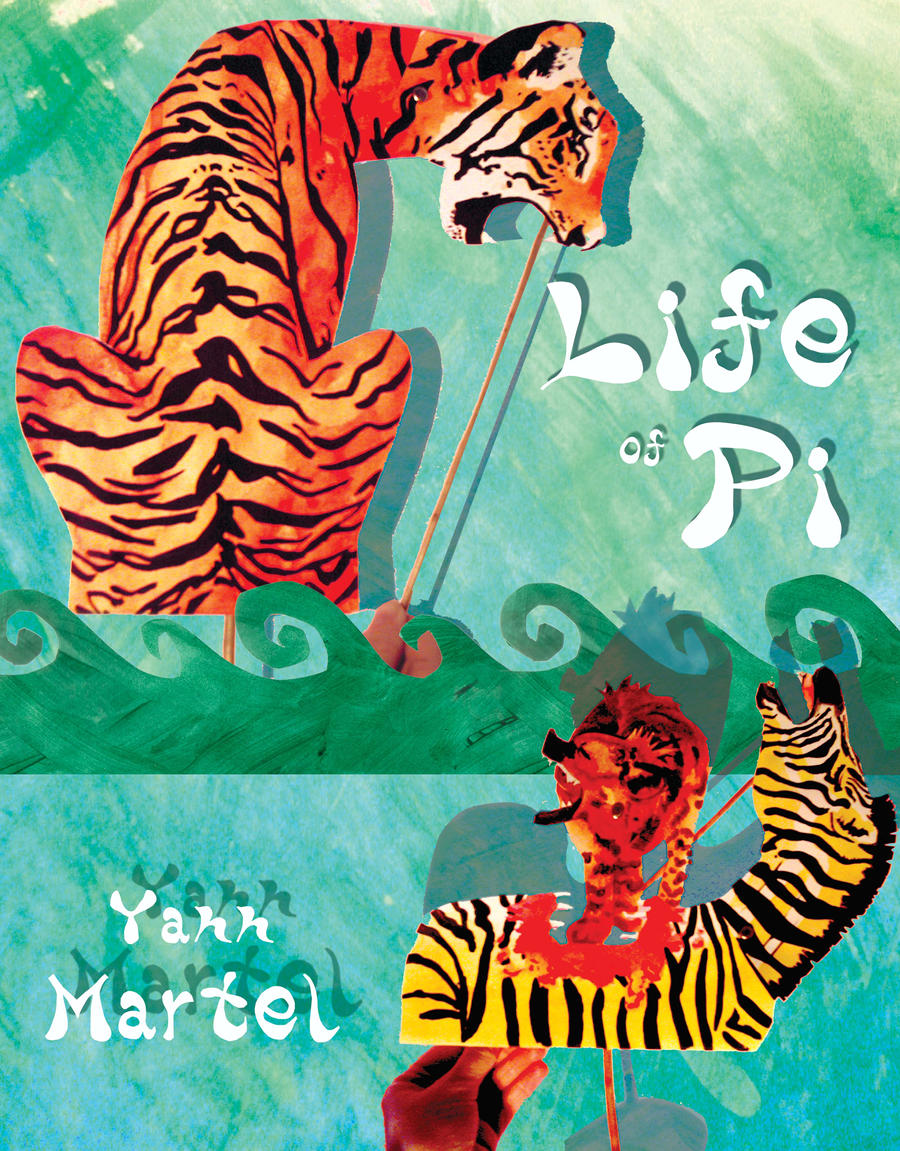
Mother Hens and Bengal Tigers
If you set out across
the ocean, either by boat or by plane there may be a moment, when you
cannot tell the difference between the water and the sky. No solid ground to see or step on; no fences to protect you. Now, consider what you might feel if you found yourself alone, on a tiny boat: in the middle of the ocean.
Alone, except for the Bengal
tiger at the other end of your tiny boat.
Perhaps you already
know Pi Patel. Maybe you have been with him on his epic voyage via the book, or the movie, Life of Pi. Or maybe, you
have no idea what I am talking about. Pi Patel is the son of a Zookeeper living
in Southeast India in the 1970’s. Pi,
like the ancient Greek letter that looks like a small shelter. Pi’s father
sells his entire zoo of animals to a Canadian, and he loads all the animals and
his entire family on to a ship to sail them across the Pacific to their new
homes. Struck by a terrible storm in the
middle of the ocean, the ship goes down and Pi Patel is the only survivor. He finds himself alone and adrift, alone except
for a sea sick tiger.
Did you feel the
looming danger in our readings today? Just beyond our sight is a dark and
terrifying night. Abram is an old man in
the desert. A long time ago he heard
God’s voice, he believed the angels. Now however, it is a wide open space on a
moonless night and he is wondering what will become of him. He hears God’s voice again And the Lord says
that his descendants will number as the stars in the sky.
The light of those distant stars may be brilliant up close,
but they are a long, long way from here. The emptiness is frightening. Those
promises may be hard to believe. Then we
have Luke, who is leading us toward Jerusalem, tragedy and destruction hang in
the air. Christ is the Lord, the Holy One, born in human flesh: he heals and feeds and invites us to the
Kingdom of God. It is real and it is true and …some people just don’t believe it.
Luke knows where we
are going and what will happen to our beloved. And we fear it. We like the man who heals us, who tells those
strange stories, we like this Jesus who multiplies loaves and offers living
water. We do not like that he says he is
going to die. We do not like that he is going to Jerusalem. Jerusalem is a city
that killed the prophets, where Uriah, Zechariah, and perhaps even Isaiah met a
bloody end. There is fear and panic, a
kingdom of anxiety. We are scattered
chickens running around the barnyard. Just
before our lessons today Jesus offers two parables: a mustard seed that grows
into a tree with plenty of room for all, and a holy woman who pushes little
tiny bits of blessed yeast all through the creation, enough to make an absurd
amount of bread. Come to me if you are
hungry, there is plenty Jesus says. But
we are chicks running around a barnyard. We do not even stop when we ask him…will
there be anything to eat?
Our gospel today is anxious
because of two threats. First, what
lies beyond the barnyard. The fox that lurks in the dark, he is a fierce wild beast,
for whom our flimsy fence is no hindrance at all. Jesus proclaims that he has nothing to fear
from earthly powers, but for everyday people that is terribly hard to believe. Herod the fox is powerful, sly, and easily threatened. Mechanizations of power, or storms at sea, there are threats that are beyond our control.
The second threat is
our failure to stop and pay attention. A mother hen calls us by name and we cannot hear her over the volume of our lives.
She wants to hold us tightly and we just keep running in circles. We sense the first crisis…we know that there is a wild beast in that dark and empty night. Swamped by panic and fear,
we simply lose our heads. We may even
decide that our safety lies in making friends with the fox. Jerusalem, Jerusalem
oh my beloved, I offer you streams of living water, and you ask if there is
anything to drink?
Our friend Pi has two
threats as well. First is the chaos
that lies beyond the boat. You sit on a lonely boath and there is nothing but a thousand miles of no one and nothing but water and her threats and her bounty.
You cannot drink the ocean, the salt will dehydrate you, and then you
are nothing but tiger food. So what are
you to do? His second threat is of
course, the tiger. The fierce wild beast
that you share a tiny boat with and you cannot make friends with a tiger.
It is Lent. It is time to lift up our eyes and look into that dark and terrifying night. To name the dangers, the chaos and despair that surrounds us. It is also time to take a deep breath, to stop, to pay attention. Pi survives because he does not remain in fear and panic. He remembers what he has learned that can
help tame the tiger. He uses the
supplies in the boat to make clean water and gather food that he, and the
tiger, may live.
There is a third threat
in the parable of the mother hen, the threat of fear itself. The hen is the stone that the builders
rejected, she is beloved, and she is to be sacrificed. Can you hear the fear in this parable? Are
you a mother or a father or a brother or a sister, and do you know that fear
for the ones you love? Is it his fear
for us, or our fear for him? From the
grown up Pi Patel we are offered this advice. “Only fear can defeat life. It is
a clever, treacherous adversary, how well I know. It has no decency, respects no law or
convention, shows no mercy. It goes for your weakest spot, which it finds with
unerring ease.”
So perhaps all these pressures
are just one threat. They are the
dark emptiness of Good Friday, which we must pass through to RISE on Eastermorning. Jesus asks us to walk with him
when it is easy, and when it is terribly, terribly hard. He asks us to believe with our whole lives, to
offer ourselves to our beloved as much as he offers himself to us. So I ask myself: What supplies are hidden in
my boat, that all may eat and drink and live? Can I take a deep breath, lift up
my eyes, and follow him when he calls?
Jerusalem, Jerusalem!
How often I have wanted to gather your people just as a hen gathers her chicks
under her wings. Why is it then that
this can be so hard to believe?
February 24, 2013 Cathedral of St. John, Albuquerque
Subscribe to:
Posts (Atom)